
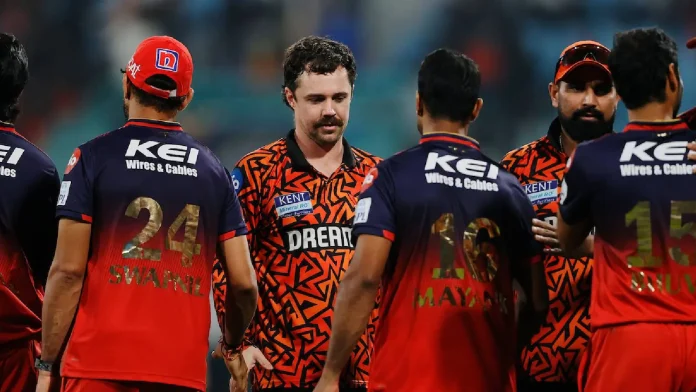

The Sunrisers Hyderabad vs Royal Challengers Bengaluru standings provide an interesting picture of the competition between two major franchises in the Indian Premier League (IPL). Both teams have developed strong fan bases through their aggressive batting, competitive bowling attacks and memorable performances. Their positions in the league table reflect not only the number of matches they win but also their consistency, ability to handle pressure and net run rate across the tournament.
In the 2026 IPL league stage, Royal Challengers Bengaluru (RCB) and Sunrisers Hyderabad (SRH) both finished with 18 points from 14 matches. However, RCB secured first place because of a superior net run rate, while SRH finished third. Gujarat Titans also ended with 18 points, making net run rate an important factor in separating the leading teams. These results show how even a single match or a few runs can influence final rankings and playoff positions.
Understanding the standings helps fans assess each team’s season, compare their performances and follow the impact of head-to-head results. It also explains why points alone do not always determine the final position in a closely contested IPL campaign.
Sunrisers Hyderabad vs Royal Challengers Bengaluru Standings: IPL 2026
The final league-stage table placed RCB above SRH despite Hyderabad winning their final league-stage meeting by 55 runs on May 22, 2026. RCB’s stronger overall net run rate helped the Bengaluru franchise retain the top position, while SRH finished third behind Gujarat Titans.
The following table summarises the two teams’ final league-stage records. These figures represent the completed 2026 league stage rather than a live, in-progress match situation.
| Standings statistic | Royal Challengers Bengaluru | Sunrisers Hyderabad |
|---|---|---|
| Final position | 1st | 3rd |
| Matches played | 14 | 14 |
| Wins | 9 | 9 |
| Losses | 5 | 5 |
| No results | 0 | 0 |
| Total points | 18 | 18 |
| Net run rate | +0.783 | +0.524 |
| Playoff qualification | Qualified | Qualified |
The figures highlight the close competition between the franchises. Both recorded nine wins and five defeats, earning 18 points each. RCB’s net run rate of +0.783 was higher than SRH’s +0.524, providing the decisive advantage in the final standings. Gujarat Titans also collected 18 points but finished second with a net run rate of +0.695.
How the IPL Points System Works
The IPL points system determines how teams are ranked during the league stage. Teams generally receive two points for a victory, no points for a defeat and one point each when a match ends without a result. A tied match is decided according to the competition’s playing conditions, with a Super Over used when applicable.
When two or more teams finish with equal points, net run rate becomes an important ranking factor. This calculation considers the difference between a team’s scoring rate and the scoring rate of its opponents across the tournament. A positive net run rate indicates that a team has scored faster than its opponents have scored against it overall.
The Sunrisers Hyderabad vs Royal Challengers Bengaluru standings demonstrate why this measurement matters. Both teams finished with 18 points, but RCB’s higher net run rate placed it above SRH. Therefore, a team must focus on winning matches and maintaining healthy margins rather than relying exclusively on the points column.

Royal Challengers Bengaluru’s Performance in IPL 2026
Royal Challengers Bengaluru enjoyed an impressive league campaign, finishing at the top of the 2026 IPL points table. The team secured nine victories in 14 matches, collecting 18 points and recording a net run rate of +0.783. Its ability to combine successful batting performances with important victories helped it remain among the leading contenders throughout the season.
RCB’s top position was particularly significant because two other franchises, Gujarat Titans and Sunrisers Hyderabad, also finished with 18 points. The difference between the teams came down to net run rate, with Bengaluru recording the best figure among the three sides.
The team’s performance reflected the value of consistency over a long tournament. Winning nine matches gave RCB a strong foundation, while its overall scoring and run-concession record helped secure first place. Even its defeat against SRH in the final league-stage encounter did not dislodge it from the top of the table.
For fans examining the Sunrisers Hyderabad vs Royal Challengers Bengaluru standings, RCB’s season illustrates how a team can lose an important late match and still maintain a leading position through its earlier results.
Sunrisers Hyderabad’s Performance in IPL 2026
Sunrisers Hyderabad also delivered a competitive campaign, ending the league stage with nine wins, five defeats and 18 points. Its net run rate of +0.524 placed it third, behind RCB and Gujarat Titans. Although SRH did not secure the top position, qualifying for the playoffs demonstrated that the team had accumulated enough victories to remain among the strongest sides in the competition.
SRH’s campaign was shaped by its attacking batting approach and its ability to produce high-scoring performances. In the final league-stage match against RCB, Hyderabad scored 255/4 in 20 overs. Ishan Kishan played a major role, scoring 79 runs from 46 deliveries, before SRH restricted Bengaluru to 200/4 to win by 55 runs.
That result highlighted SRH’s potential to dominate a match through aggressive batting and effective execution. However, one victory could not erase the effects of results accumulated throughout the season. The standings reflected all 14 league matches, not merely the outcome of the final encounter between the two franchises.
Head-to-Head Match and Its Effect on the Standings
The match between SRH and RCB on May 22, 2026, provided a particularly interesting contrast between an individual match result and the overall league table. Sunrisers Hyderabad won by 55 runs after posting a substantial total and limiting RCB to 200/4.
| Match detail | Information |
|---|---|
| Tournament | IPL 2026 |
| Match date | May 22, 2026 |
| Venue | Rajiv Gandhi International Stadium, Hyderabad |
| Sunrisers Hyderabad | 255/4 in 20 overs |
| Royal Challengers Bengaluru | 200/4 in 20 overs |
| Result | SRH won by 55 runs |
| Player of the Match | Ishan Kishan |
| Ishan Kishan’s score | 79 off 46 balls |
This result improved SRH’s immediate record against RCB in that encounter, but the broader league standings remained based on every team’s complete league-stage performance. RCB retained first place because its net run rate was higher than those of the other teams tied on 18 points.
The match also illustrated the importance of margin. SRH’s 55-run victory was a strong performance, yet the final table considered scoring rates across all 14 matches. Consequently, the standings should always be interpreted alongside match results, rather than using a single head-to-head outcome as the only measure of team strength.
Why Net Run Rate Matters
Net run rate, commonly abbreviated as NRR, is one of the most important statistics in limited-overs cricket tournaments. It measures a team’s scoring rate against the rate at which opponents score against it. When teams have equal points, NRR can determine which side receives a higher ranking.
For example, a team that wins several matches by substantial margins may build a stronger net run rate than another team with the same number of victories but narrower wins. Conversely, heavy defeats can reduce a team’s overall NRR, making later qualification calculations more difficult.
In the 2026 IPL standings, RCB finished with a net run rate of +0.783, compared with Gujarat Titans at +0.695 and SRH at +0.524. All three collected 18 points, but their different scoring-rate records established the order of the top three positions.
Key factors influencing net run rate include:
-
The number of runs scored and overs faced throughout the league stage.
-
The number of runs conceded and overs bowled.
-
The margins of victories and defeats.
-
The number of matches completed and the applicable tournament rules.
Teams cannot control every result elsewhere in the competition, but they can improve their own position by scoring efficiently, limiting opposition scoring and avoiding heavy defeats.
Key Players and Match-Winning Contributions
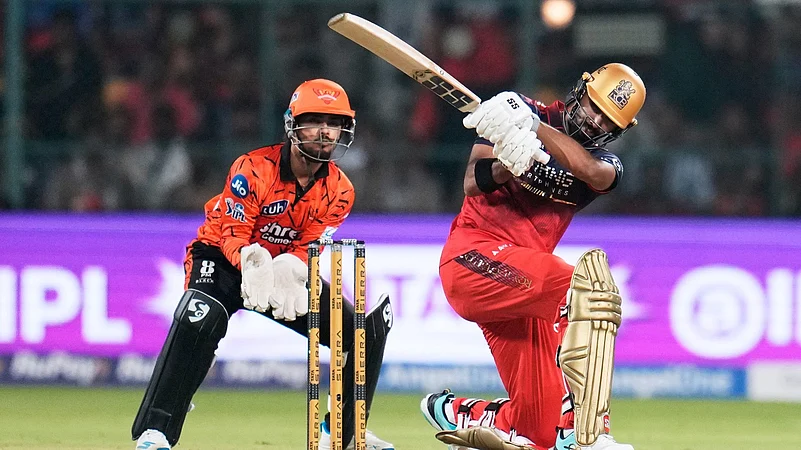
Individual performances often influence a team’s position in the league table. Strong batting partnerships help establish competitive totals, while disciplined bowling can restrict opponents and turn close matches into victories. Fielding also matters because dropped catches, missed run-out opportunities and misfields can change the outcome of important contests.
In the final league-stage meeting between SRH and RCB, Ishan Kishan’s innings of 79 from 46 deliveries was a major contributor to Hyderabad’s total of 255/4. The substantial score placed pressure on RCB’s batting lineup and helped SRH secure a convincing win.
For RCB, the overall league record demonstrated the value of maintaining performance across multiple fixtures. Its first-place finish was not determined by one standout performance but by the combined effect of its results across 14 matches.
Fans assessing the Sunrisers Hyderabad vs Royal Challengers Bengaluru standings should therefore consider more than the points and positions. Batting consistency, bowling effectiveness, contributions from different players and performance under pressure all help explain why teams finish where they do.
What the Standings Mean for Playoff Qualification
The league-stage standings determine the teams that progress to the IPL playoffs and their initial positions in the knockout phase. In 2026, RCB, Gujarat Titans, SRH and Rajasthan Royals secured the four playoff places. RCB finished first, Gujarat Titans second, SRH third and Rajasthan Royals fourth.
Finishing first can provide a valuable strategic advantage because the IPL playoff format gives the top two teams an opportunity to reach the final through Qualifier 1, with another opportunity available through Qualifier 2 if necessary. The third- and fourth-placed teams begin their playoff campaign in the Eliminator, where defeat ends their title hopes.
For RCB, the top position provided the opportunity to play Qualifier 1 against Gujarat Titans. SRH’s third-place finish meant it entered the Eliminator stage instead. Thus, although both teams collected the same number of league points, the difference in their net run rates influenced their playoff routes.
The standings are therefore more than a numerical record. They help determine qualification, playoff matchups and the route each franchise must take to compete for the championship.
Comparing SRH and RCB: Major Takeaways
The final league table reveals several important differences and similarities between the two teams.
-
Equal points: Both franchises earned 18 points from 14 matches.
-
Identical win-loss records: Each team won nine matches and lost five.
-
Different net run rates: RCB’s +0.783 was higher than SRH’s +0.524.
-
Different final positions: RCB finished first, while SRH finished third.
-
Strong head-to-head finish for SRH: Hyderabad beat Bengaluru by 55 runs in their May 22 meeting.
-
Both qualified: Each franchise advanced to the 2026 IPL playoffs.
These takeaways show that the points table provides a comprehensive overview of the league stage. Head-to-head results matter to supporters, but the overall record and applicable tie-breaking criteria determine the final positions.
Conclusion
The Sunrisers Hyderabad vs Royal Challengers Bengaluru standings offer a clear example of how closely contested the IPL can be. Both teams completed the 2026 league stage with nine wins, five losses and 18 points, but RCB secured first place through its superior net run rate of +0.783. SRH finished third with a net run rate of +0.524, while Gujarat Titans occupied second place.
Hyderabad’s 55-run victory over Bengaluru on May 22 was an important result, featuring a strong batting performance led by Ishan Kishan. Nevertheless, the final rankings reflected each team’s entire league campaign rather than that single match.
For cricket fans, following the standings means examining points, wins, losses, net run rate and playoff qualification together. These figures help explain team rankings, measure consistency and reveal how small differences can influence the route to an IPL title.