


Introduction
India vs New Zealand is one of the most interesting matchups in international cricket, bringing together two teams with contrasting playing styles, strong cricketing traditions, and a history of competitive encounters. India is widely associated with technically gifted batters, attacking stroke play, and a large pool of talented players, while New Zealand has built a reputation for disciplined bowling, adaptable batting, and outstanding teamwork. When these teams meet, the contest often becomes a test of skill, temperament, and tactical decision-making.
The rivalry covers Test cricket, One Day Internationals (ODIs), and Twenty20 Internationals (T20Is), as well as major competitions such as the ICC Cricket World Cup and World Test Championship. Each format creates a different challenge. Test matches reward patience and consistency, ODIs require a balance between scoring and preserving wickets, and T20Is demand quick decisions and execution under pressure.
For cricket fans, following India vs New Zealand means looking beyond the final score. Head-to-head records, venue conditions, batting partnerships, bowling spells, and performances in knockout matches all help explain why particular encounters become memorable. The two teams have experienced important victories and disappointing defeats, making their rivalry especially compelling.
This article explores the history of India vs New Zealand cricket, comparisons across formats, notable players, major tournament encounters, tactical differences, and the statistics that help readers understand this international matchup.
The History of the India vs New Zealand Cricket Rivalry
The India vs New Zealand cricket rivalry dates back to 1955, when the two countries first faced each other in Test cricket. Their early encounters were generally shaped by traditional cricketing values, with long innings, patient batting, and disciplined bowling playing central roles. Over time, the competition expanded across formats, creating a much broader rivalry that now attracts attention from fans around the world.
India gradually developed into one of the strongest teams in international cricket, supported by its batting depth, spin-bowling resources, and growing experience in overseas conditions. New Zealand, meanwhile, established itself as a highly competitive side known for intelligent captaincy, seam bowling, and the ability to perform effectively against stronger opponents on major occasions.
One reason this rivalry remains interesting is that the teams do not always follow the same pattern. India can dominate through aggressive batting and spin, particularly on home pitches, while New Zealand can use swing, seam movement, and disciplined fielding to challenge Indian batters. These differences create tactical contests rather than predictable outcomes.
The rivalry became especially prominent during major ICC tournaments. New Zealand’s victories over India in the 2019 ODI World Cup semi-final and the 2021 World Test Championship final demonstrated its ability to succeed under pressure. India responded with important victories, including its triumph in the 2023 ODI World Cup semi-final and the 2025 Champions Trophy final.
These results show that overall strength and performance in a specific match are not always the same. A team may have a better bilateral record but still face difficulties when a tournament reaches its decisive stage.
India vs New Zealand Head-to-Head Records Across Formats
Head-to-head statistics provide a useful starting point for understanding this matchup. However, cricket records should always be read with their dates and definitions in mind. Totals change when new matches are played, and databases can differ in how they classify tied matches, Super Over decisions, and no-results.
The following figures provide a historical snapshot of the rivalry before the 2026 multi-format tour, rather than a complete live record as of today. The figures are reported in contemporary cricket coverage.
| Format | Matches | India wins | New Zealand wins | Other results |
|---|---|---|---|---|
| Test cricket | 65 | 22 | 16 | 27 draws |
| One Day Internationals | 123 | 63 | 52 | 1 tie, 7 no-results |
| T20 Internationals | 31 | 19 | 11 | 1 tie |
These numbers show India’s historical advantage in all three formats in this particular statistical snapshot. Its edge is especially visible in ODIs, where consistent batting performances and effective bowling combinations have helped the team win numerous bilateral contests.
Test cricket has produced a substantial number of draws because five-day matches can be influenced by weather, pitch deterioration, defensive batting, and the time available to take 20 wickets. New Zealand’s victories also demonstrate that it can compete successfully against India, including in challenging conditions.
T20I cricket is different because a few overs can determine the outcome. A fast start, an expensive bowling spell, or a successful finish can change the result quickly. Therefore, even when one team leads the historical record, individual T20 matches remain difficult to predict.
For anyone comparing India vs New Zealand stats, the most useful approach is to examine the overall record alongside recent results, venue conditions, and the format being played.
India vs New Zealand in Test Cricket
Test cricket remains one of the most revealing ways to evaluate the technical quality and adaptability of both teams. Batters must negotiate changing conditions over several days, while bowlers need to create pressure through sustained accuracy, movement, and tactical variation.
India traditionally benefits from home conditions that can assist spin bowling as matches progress. Skilled spinners can exploit rough patches outside the batter’s hitting zone, while patient batters can build substantial totals when the surface offers consistent bounce. Indian teams have also developed greater experience playing pace bowling overseas, although conditions in New Zealand can still present significant challenges.
New Zealand’s home environment often provides opportunities for seam bowlers. Cloud cover, movement through the air, and assistance from the pitch can make the opening sessions difficult for visiting batters. Indian players must generally focus on leaving deliveries outside off stump, maintaining a compact defensive technique, and avoiding unnecessary attacking shots early in their innings.
The contest also depends on how each side handles pressure after losing early wickets. A strong middle-order partnership can turn a difficult situation into a competitive total, while a lower-order contribution can prove decisive in closely fought matches.
A major turning point in this rivalry occurred in June 2021, when New Zealand defeated India in the inaugural World Test Championship final in Southampton. New Zealand won by eight wickets, with its bowlers controlling key passages and its batters completing the chase. The result established New Zealand as the first World Test Championship winner.
India’s later Test performances against New Zealand also demonstrated how difficult the rivalry can be at home. New Zealand won the 2024 Test series in India by three matches to none, securing a historic result through disciplined bowling and effective batting. The series showed that familiar home conditions do not guarantee success when an opponent executes its plans consistently.
For Test cricket followers, the key indicators are batting time, wickets lost, bowling control, partnerships, and the ability to adapt between innings. A team that manages these elements better often gains the advantage even without producing the highest individual score.
India vs New Zealand in One Day International Cricket
ODI cricket brings a different balance of risk and control. Each team has a limited number of overs, so batters must build an innings while keeping enough wickets available for a strong finish. Bowlers must defend runs through accurate lines, changes of pace, field placements, and well-planned overs at the end.
India’s ODI strength has often come from a combination of top-order stability and aggressive scoring. Batters such as Virat Kohli and Rohit Sharma have played important roles in setting up innings, while all-rounders and lower-order hitters have helped increase scoring rates late in the game. India’s bowling resources also allow captains to adjust between pace and spin according to the pitch.
New Zealand has frequently challenged India with disciplined seam bowling, intelligent fielding, and flexible batting. Its players are often effective at targeting gaps, rotating the strike, and capitalising when opponents lose control. This approach can be particularly valuable in tournaments where a single mistake can determine qualification or elimination.
The 2019 ODI World Cup semi-final remains one of the rivalry’s most memorable encounters. New Zealand produced a competitive total before its bowlers applied pressure to India’s top order. India eventually fell short by 18 runs in a match that stretched across two days because of rain.
The 2023 ODI World Cup semi-final produced a different result. India scored a formidable total, led by outstanding batting performances, before its bowlers restricted New Zealand. Mohammed Shami took seven wickets, while Virat Kohli recorded his 50th ODI century. India won by 70 runs and progressed to the final.
These matches illustrate why ODI cricket between the teams is so compelling. A side can control much of a match but still lose momentum during a short, decisive period. Successful teams therefore need to manage both the middle overs and the final stages of an innings.
India vs New Zealand in T20 International Cricket
T20I cricket places a premium on power hitting, rapid decision-making, and precise bowling execution. With only 20 overs per innings, there is little time to recover from a poor start. The smallest tactical adjustments can have a major impact on the scoreboard.
India’s T20 approach often combines aggressive opening batting, flexible middle-order roles, and attacking options throughout the lineup. Batters can target specific bowlers, while all-rounders provide flexibility when a team needs extra batting depth or another bowling option. India’s spin and pace combinations also allow captains to vary their plans according to conditions.
New Zealand generally relies on a combination of powerful batting, calculated aggression, and tactical bowling changes. Its players can be effective at exploiting matchups, particularly when a batter struggles against a specific type of delivery. The team can also make use of experienced finishers to maintain scoring pressure in the closing overs.
In T20 cricket, a good powerplay can create the platform for a large total, but wickets remain important. A team that scores quickly while losing several batters may struggle during the final overs. Equally, a side defending a moderate total can remain competitive by taking wickets at regular intervals.
The teams’ T20I rivalry has included tied matches and games decided by a Super Over. Such outcomes highlight how small the margin between victory and defeat can be in the shortest international format. Because match totals and records change frequently, fans should consult current scorecards when checking the latest India vs New Zealand T20I statistics.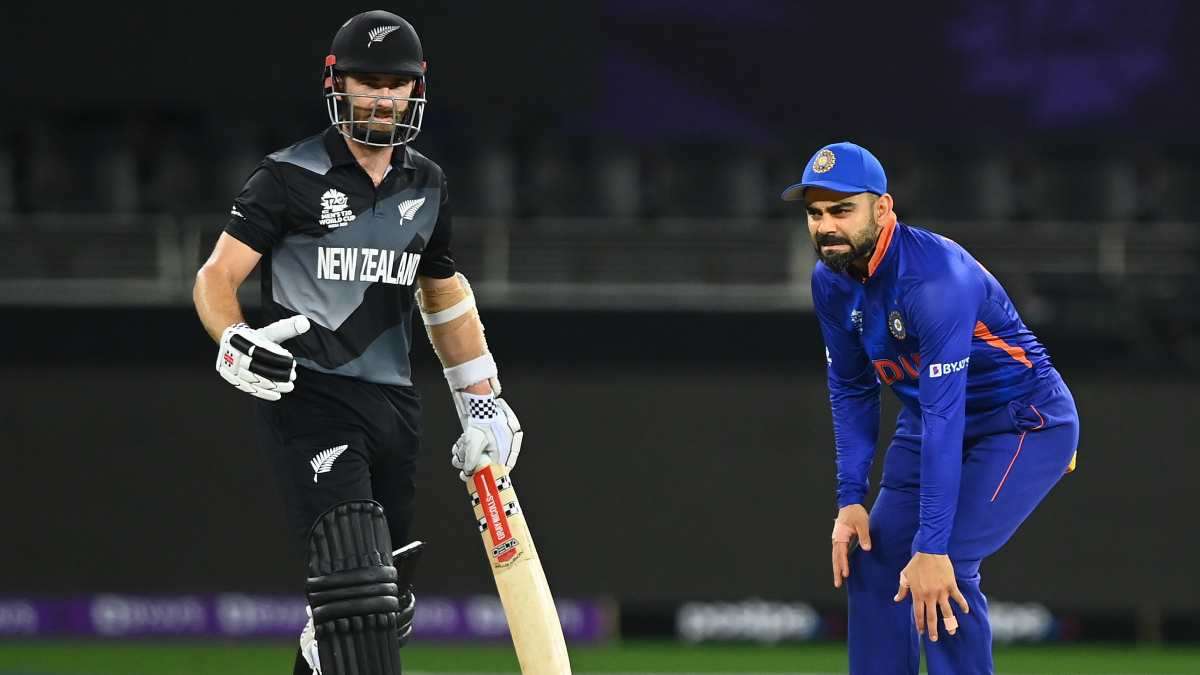
Major ICC Tournament Encounters Between India and New Zealand
Bilateral series are important, but ICC competitions often create the most lasting memories. The pressure is different because teams have fewer opportunities to recover from a defeat, and one match may determine whether years of preparation lead to a trophy.
New Zealand’s victory in the 2000 ICC KnockOut final was an early example of its ability to deliver under pressure. Chris Cairns played a decisive role with an unbeaten century, helping New Zealand secure a major international trophy.
The 2019 World Cup semi-final and the 2021 World Test Championship final strengthened New Zealand’s reputation as a formidable tournament opponent. Both results came against India in high-profile contests, demonstrating the value of disciplined planning and calm execution.
India’s response in subsequent tournaments changed the narrative. In the 2023 ODI World Cup semi-final, India produced a strong batting performance before its bowlers secured a convincing victory. In the 2025 Champions Trophy final, India defeated New Zealand by four wickets after chasing a target of 252. Rohit Sharma scored 76, and Ravindra Jadeja hit the winning runs. The victory gave India its third Champions Trophy title.
The teams have also faced each other in the T20 World Cup. India finally defeated New Zealand in a T20 World Cup knockout setting in the 2026 final, winning by 96 runs according to contemporary tournament coverage. That result added another significant chapter to the rivalry.
These matches underline an important point: tournament experience matters, but it does not replace execution on the day. Strong starts, effective bowling changes, calm chasing, and pressure management can determine which team advances.
Key Players Who Have Shaped the India vs New Zealand Rivalry
Individual performances have frequently influenced the outcome of India vs New Zealand matches. While team strategy remains important, experienced batters, wicket-taking bowlers, and dependable all-rounders can change a contest within a few overs or a single session.
For India, Virat Kohli has been particularly influential in ODI cricket because of his ability to build an innings, maintain a scoring rate, and handle pressure during a chase. Rohit Sharma has contributed through aggressive opening batting, creating strong starts that allow the middle order to play with greater freedom. In Test cricket, players such as Rahul Dravid established a reputation for patience and technical discipline, while modern Indian bowlers have provided important breakthroughs in challenging conditions.
New Zealand has also produced several outstanding performers. Kane Williamson is known for his controlled stroke play and ability to build an innings against quality bowling. Ross Taylor contributed consistently across formats, while players such as Trent Boult and Tim Southee have troubled Indian batters with swing and seam movement. Mitchell Santner has offered control and variation with spin, especially in limited-overs cricket.
The following players illustrate different strengths that have influenced this matchup:
-
Virat Kohli: An accomplished ODI batter whose ability to construct an innings and chase targets has made him a major figure in India vs New Zealand contests.
-
Rohit Sharma: An aggressive opener capable of changing the pace of an ODI or T20I with powerful stroke play.
-
Kane Williamson: A technically sound batter whose composure and placement have been valuable for New Zealand in pressure situations.
-
Trent Boult: A left-arm fast bowler known for swing, especially with the new ball, and his ability to attack the stumps.
-
Ravichandran Ashwin: A leading Indian spin bowler whose variations, accuracy, and tactical awareness have been important in Test cricket.
These examples are not a complete ranking of the best players. Different eras, formats, and conditions favour different skills, and current team selections can change the balance of an upcoming match.
Batting and Bowling Strengths of Both Teams
India’s batting depth has often been one of its greatest advantages. A strong top order can establish a foundation, while the middle order can adapt to the required scoring rate. In limited-overs cricket, this flexibility allows the team to accelerate without relying on a single batter for the entire innings.
New Zealand’s batting approach often emphasises partnerships and situational awareness. Rather than attempting to dominate every over, its players can build a competitive total through strike rotation and targeted attacking shots. When the opportunity arises, experienced batters can increase the tempo to put pressure on the opposition.
Bowling strengths differ according to conditions. Indian spinners can be highly effective on dry surfaces, particularly when they receive assistance from turn and variable bounce. India’s fast bowlers also provide wicket-taking options through pace, movement, and accuracy. The combination gives captains the flexibility to attack with different methods throughout an innings.
New Zealand’s seamers can be especially dangerous on pitches that provide lateral movement. Their ability to maintain disciplined lines forces batters to play cautiously, which can create opportunities for edges and mistimed shots. New Zealand’s spinners provide another option when the pitch slows down or when the captain needs to control the scoring rate.
Fielding also deserves attention. A sharp catch, a direct-hit run-out, or an excellent boundary save can influence a close match without appearing prominently in traditional batting statistics. Teams that combine disciplined bowling with consistent fielding often create pressure that leads to mistakes.
The most effective team is therefore not necessarily the one with the biggest names. It is the team that uses its available players according to conditions and executes its plans for longer periods.
How Pitch and Weather Conditions Influence India vs New Zealand
Venue conditions can substantially change the balance between India and New Zealand. Cricket statistics become more meaningful when they are considered alongside the location and surface on which the match is played.
In India, dry pitches may favour spin as a match progresses. Batters who read variations well can score freely, but those who misjudge the turn may struggle. Teams batting first sometimes aim to establish a competitive total before the surface becomes more difficult, although the best strategy depends on the ground and the expected weather.
New Zealand’s conditions can be more favourable to swing and seam bowling, particularly during periods of cloud cover or when the pitch retains moisture. Visiting Indian batters may need to spend more time assessing movement before playing attacking shots. A strong opening partnership can be particularly valuable because it reduces the pressure on the middle order.
Weather also affects Test matches through interruptions and reduced playing time. Rain can increase the possibility of a draw, while changing light and cloud conditions may alter how the ball behaves. In limited-overs matches, the forecast can influence decisions about batting first, chasing, and selecting bowlers.
Before an upcoming India vs New Zealand match, readers should consider the following factors alongside historical records: the pitch report, recent weather forecasts, team combinations, player availability, and performances at the venue. These details provide more context than relying on a team’s overall win percentage alone.
Conclusion
India vs New Zealand is a compelling international cricket rivalry shaped by contrasting playing styles, memorable tournament encounters, and consistently interesting tactical contests. India’s batting depth, spin resources, and ability to build strong totals have contributed to its historical success, while New Zealand’s disciplined bowling, adaptable batting, and effective teamwork have produced important victories of its own.
The rivalry has delivered defining moments in Test cricket, ODIs, and T20Is, from New Zealand’s success in the inaugural World Test Championship final to India’s victories in the 2023 ODI World Cup semi-final and the 2025 Champions Trophy final. These results demonstrate that preparation, conditions, and execution can matter just as much as reputation.