
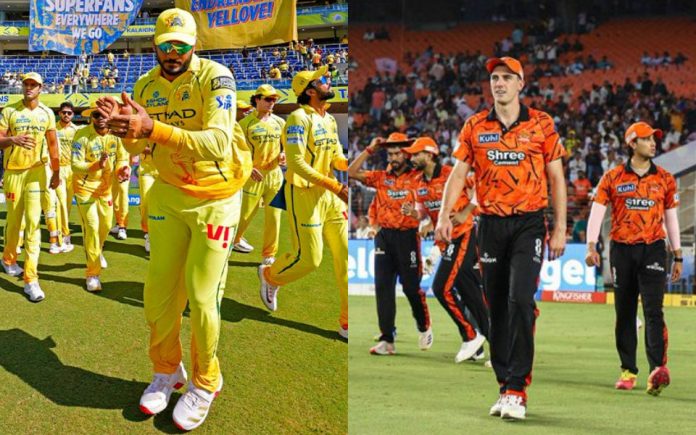

The Chennai Super Kings vs Sunrisers Hyderabad match scorecard provides a detailed look at an exciting Indian Premier League encounter between two competitive franchises. The teams met in Match 63 of IPL 2026 on 18 May at the MA Chidambaram Stadium in Chennai. Sunrisers Hyderabad chased down Chennai Super Kings’ total to secure a five-wicket victory, strengthening their position in the race for the playoffs.
Chennai Super Kings batted first after winning the toss and posted 180/7 in 20 overs. Their innings featured useful contributions from Dewald Brevis, Kartik Sharma and Shivam Dube. Sunrisers Hyderabad responded with 181/5 in 19 overs, completing the chase with six balls remaining. Ishan Kishan played the decisive innings, scoring 70 runs and earning Player of the Match honours. The contest showcased the importance of partnerships, controlled bowling and calculated aggression in T20 cricket.
Chennai Super Kings vs Sunrisers Hyderabad Match Scorecard Overview
The match featured two contrasting innings. Chennai built a competitive total through several attacking contributions, while Hyderabad relied on a strong middle-order partnership to stay ahead of the required run rate. Although CSK reached 180, SRH maintained their momentum and finished the chase before the final over.
Here is the match summary:
| Match detail | Information |
|---|---|
| Tournament | Indian Premier League 2026 |
| Match number | 63 |
| Date | 18 May 2026 |
| Venue | MA Chidambaram Stadium, Chennai |
| Toss | CSK won and elected to bat |
| Chennai Super Kings | 180/7 in 20 overs |
| Sunrisers Hyderabad | 181/5 in 19 overs |
| Result | SRH won by 5 wickets |
| Player of the Match | Ishan Kishan |
| Winning team’s run rate | 9.53 runs per over |
The figures highlight Hyderabad’s efficient chase. SRH needed 181 runs to win and reached the target at 9.53 runs per over, finishing with one over remaining. For Chennai, the main challenge was defending a total that required sustained pressure and regular wickets.
Chennai Super Kings Batting Scorecard
Chennai Super Kings produced 180/7, with Dewald Brevis emerging as their leading scorer. The innings included a quick start, a few important middle-order contributions and a late push to keep the total competitive. However, Pat Cummins and the Hyderabad bowling attack prevented CSK from building an even larger score.
| Batter | Runs | Balls | 4s | 6s |
|---|---|---|---|---|
| Sanju Samson | 27 | 13 | 5 | 1 |
| Ruturaj Gaikwad | 15 | 21 | 0 | 0 |
| Urvil Patel | 13 | 8 | 0 | 2 |
| Kartik Sharma | 32 | 19 | 3 | 2 |
| Dewald Brevis | 44 | 27 | 2 | 4 |
| Shivam Dube | 26 | 23 | 3 | 1 |
| Prashant Veer | 11 | 9 | 2 | 0 |
| Akeal Hosein | 3* | 1 | 0 | 0 |
| Extras | 9 | — | — | — |
| Total | 180/7 | 20 overs |
Batting figures are from the published match scorecard; the asterisk indicates not out.
Dewald Brevis scored 44 from 27 deliveries, striking four sixes and two fours. His innings helped Chennai maintain a healthy scoring rate during the middle and later stages. Kartik Sharma added 32 from 19 balls, while Shivam Dube contributed 26. Sanju Samson’s 27 from just 13 deliveries gave the innings early impetus, but the loss of wickets prevented Chennai from sustaining uninterrupted momentum.
The scorecard also illustrates why contributions throughout the batting order matter in T20 cricket. Several CSK batters made useful starts, yet none reached a half-century. A larger individual innings or a stronger finish could have pushed the total beyond 180 and placed additional pressure on Hyderabad’s batting lineup.

Sunrisers Hyderabad Batting Scorecard
Sunrisers Hyderabad successfully chased 181 runs, finishing at 181/5 in 19 overs. Ishan Kishan was the standout performer, while Heinrich Klaasen provided powerful support during the middle overs. Their partnership helped SRH recover from early setbacks and maintain control of the chase.
| Batter | Runs | Balls | 4s | 6s |
|---|---|---|---|---|
| Abhishek Sharma | 26 | 21 | 3 | 1 |
| Travis Head | 6 | 6 | 1 | 0 |
| Ishan Kishan | 70 | 47 | 7 | 3 |
| Heinrich Klaasen | 47 | 26 | 6 | 2 |
| Nitish Kumar Reddy | 11 | 7 | 1 | 0 |
| Salil Arora | 10* | 5 | 0 | 1 |
| Smaran Ravichandran | 5* | 2 | 1 | 0 |
| Extras | 6 | — | — | — |
| Total | 181/5 | 19 overs |
Source: published IPL match scorecard. Not-out batters are marked with an asterisk.
Kishan’s 70 from 47 balls was the foundation of the successful chase. He combined sensible strike rotation with timely boundaries, preventing the required run rate from becoming difficult. Klaasen added 47 from only 26 deliveries, including six fours and two sixes. His attacking approach changed the tempo of the innings and helped SRH move closer to the target.
Abhishek Sharma also contributed 26 runs, giving Hyderabad valuable support at the top of the order. Although Travis Head departed early, the subsequent partnerships ensured that the early wicket did not disrupt the chase. The Chennai Super Kings vs Sunrisers Hyderabad match scorecard demonstrates how a strong partnership in the middle overs can outweigh the pressure created by early dismissals.
Sunrisers Hyderabad Bowling Performance
Hyderabad’s bowlers laid the groundwork for the victory by taking wickets at important moments. Pat Cummins delivered an especially effective spell, combining control with the ability to dismiss key batters. His performance restricted Chennai from converting its promising starts into a substantially larger total.
| Bowler | Overs | Runs | Wickets |
|---|---|---|---|
| Nitish Kumar Reddy | 2 | 35 | 0 |
| Praful Hinge | 3 | 37 | 1 |
| Pat Cummins | 4 | 28 | 3 |
| Eshan Malinga | 4 | 26 | 1 |
| Sakib Hussain | 4 | 34 | 2 |
| Shivang Kumar | 3 | 20 | 0 |
Cummins finished with three wickets for 28 runs in four overs. His dismissals included Sanju Samson, Kartik Sharma and Ruturaj Gaikwad, three important players in Chennai’s batting order. Eshan Malinga took one wicket for 26 runs, while Sakib Hussain claimed two wickets for 34 runs.
These breakthroughs were important because Chennai had several batters capable of accelerating during the final overs. By removing established players and limiting uninterrupted partnerships, Hyderabad reduced CSK’s finishing potential. The bowling effort was a collective one, with Cummins leading the attack and the other bowlers contributing at different stages.
Chennai Super Kings Bowling Performance
Defending 180, Chennai needed early wickets and consistent pressure throughout the innings. Its bowlers managed to dismiss Travis Head early and later removed important batters, including Heinrich Klaasen and Nitish Kumar Reddy. However, Ishan Kishan’s innings and the partnerships around him made the chase difficult to stop.
| Bowler | Overs | Runs | Wickets |
|---|---|---|---|
| Akeal Hosein | Figures not fully verified here | — | 1 |
| Mukesh Choudhary | Figures not fully verified here | — | 3 |
| Anshul Kamboj | Figures not fully verified here | — | 1 |
| Noor Ahmad | Figures not fully verified here | — | 1 |
| Other CSK bowlers | Figures not fully verified here | — | — |
The verified scorecard records show wickets for Akeal Hosein, Mukesh Choudhary, Anshul Kamboj and Noor Ahmad. Unconfirmed bowling figures have been omitted rather than estimated.
Mukesh Choudhary provided an important breakthrough by dismissing Travis Head and later Nitish Kumar Reddy. Akeal Hosein removed Abhishek Sharma, while Noor Ahmad dismissed Klaasen through a stumping. These wickets gave Chennai opportunities to regain control, but Kishan’s innings kept the required run rate manageable.
For CSK, the main difficulty was containing the scoring after the opening overs. When a chasing team has an established batter at one end and an aggressive partner at the other, bowlers must frequently adjust their lengths and field placements. Hyderabad handled those periods effectively and remained on course for victory.

Key Moments That Decided the Match
Several moments shaped the outcome of this IPL contest. Chennai’s total was competitive, but Hyderabad’s middle-order execution made the difference.
-
Sanju Samson’s quick start: His 27 from 13 balls helped Chennai begin aggressively.
-
Dewald Brevis’ contribution: His 44 from 27 balls provided CSK with its highest individual score.
-
Pat Cummins’ three wickets: He removed key Chennai batters and limited their scoring opportunities.
-
Early wicket for Chennai: Mukesh Choudhary dismissed Travis Head, giving CSK an initial opening.
-
Kishan and Klaasen’s partnership: Their attacking combination shifted the balance towards SRH.
-
A controlled finish: Hyderabad reached 181/5 in 19 overs, completing the chase with six balls remaining.
These moments explain why the final result was not determined by the first innings alone. Chennai produced a respectable score, but Hyderabad’s batters responded with greater consistency when it mattered most.
First Innings Analysis: How CSK Reached 180
Chennai’s innings combined attacking batting with periods of consolidation. Samson’s rapid scoring gave the team early momentum, while Urvil Patel added 13 from eight deliveries. Kartik Sharma and Brevis then contributed valuable runs as Chennai attempted to build a platform for a strong finish.
However, the dismissal of Gaikwad for 15 from 21 balls meant that the captain could not significantly accelerate the innings. Brevis took responsibility for the later stages, scoring 44 before Eshan Malinga dismissed him. Dube’s 26 and Prashant Veer’s 11 helped Chennai reach 180, but the wickets lost during the closing overs limited the final surge.
A total of 180 can be challenging to chase, particularly when bowlers maintain discipline and take wickets at regular intervals. In this match, however, Hyderabad’s batting strength and the contributions of its key players proved sufficient to overcome the target.
Second Innings Analysis: SRH Complete the Chase
Hyderabad began its chase with the intention of maintaining a competitive scoring rate. Head’s early dismissal briefly gave Chennai hope, but Abhishek Sharma and Kishan ensured that the innings did not lose direction. Once Klaasen joined Kishan, the scoring accelerated considerably.
Kishan’s 70 was particularly valuable because it balanced aggression with control. He did not rely exclusively on boundaries; he also rotated the strike and ensured that Hyderabad continued to make progress. Klaasen’s 47 from 26 balls added another attacking dimension, putting pressure on Chennai’s bowlers.
Even after both batters departed, SRH had enough runs on the board and a manageable target remaining. Salil Arora and Smaran Ravichandran helped complete the chase. The team reached 181 in 19 overs, confirming a five-wicket victory.
What the Result Meant for Both Teams
The result was important for the teams’ respective IPL campaigns. Hyderabad secured its place in the 2026 playoffs following the win, while Chennai remained in contention for a playoff position at that stage of the competition.
For SRH, the victory demonstrated the value of a deep batting lineup and the ability to recover from early wickets. Its bowlers restricted Chennai to 180, and its leading batters then executed the chase successfully. The performance offered confidence heading into the decisive stages of the tournament.
For CSK, the match highlighted areas requiring improvement. Although several batters scored useful runs and the bowlers took wickets, the team could not sustain enough pressure during the middle overs of the chase. Chennai’s overall performance contained positives, but Hyderabad was more effective at converting key opportunities into a match-winning result.
Conclusion
The Chennai Super Kings vs Sunrisers Hyderabad match scorecard tells the story of an entertaining IPL 2026 contest decided by Hyderabad’s superior execution during the chase. Chennai Super Kings scored 180/7, with Dewald Brevis leading the batting effort with 44 runs. Sunrisers Hyderabad replied with 181/5 in 19 overs, winning by five wickets.
Ishan Kishan’s 70 and Heinrich Klaasen’s 47 were central to the successful pursuit, while Pat Cummins’ three-wicket spell helped restrict Chennai in the first innings. Both teams showed moments of quality, but SRH combined effective bowling with decisive batting partnerships to secure the result.
For cricket fans, the contest offered a clear example of how partnerships, wicket-taking spells and calculated aggression influence T20 outcomes. The final scorecard reflects Hyderabad’s ability to respond to pressure and complete a challenging chase with an over to spare.