


The afg vs ban odi rivalry has developed into an increasingly competitive contest in international cricket. Both Afghanistan and Bangladesh have established themselves as strong teams in Asian cricket, with the ability to challenge higher-ranked opponents on the right day. Their meetings are particularly interesting because the two sides bring different strengths to the 50-over format. Afghanistan have built a reputation around their world-class spin resources and aggressive batting, while Bangladesh have traditionally relied on disciplined bowling, experienced middle-order players and their ability to adapt to difficult conditions.
The next chapter of this rivalry will take place during Afghanistan’s ODI tri-nation series involving Bangladesh and Zimbabwe in the United Arab Emirates. According to the Afghanistan Cricket Board, Afghanistan and Bangladesh are scheduled to meet on October 21, 2026, at Sharjah Cricket Stadium. The match will be the third league fixture of the tri-series, with the top two teams moving into the final on October 23.
The timing makes the contest particularly important. Both teams will be using the tournament as valuable preparation for the broader ODI cycle, while the UAE conditions can provide a demanding test of batting technique and bowling variety. With Afghanistan bringing several established white-ball stars and Bangladesh possessing considerable experience in Asian conditions, the fixture could become one of the most closely watched matches of the series.
Afghanistan vs Bangladesh ODI: Current Schedule and Competition Context
The upcoming afg vs ban odi match is part of a four-match ODI tri-nation programme featuring Afghanistan, Bangladesh and Zimbabwe. Bangladesh and Zimbabwe are scheduled to open the ODI competition on October 17 at the Zayed Cricket Stadium, followed by Afghanistan against Zimbabwe on October 19. Afghanistan will then meet Bangladesh on October 21 at Sharjah Cricket Stadium before the top two teams compete in the final on October 23.
This structure gives every league match added importance because each side has limited opportunities to collect points and build momentum. Afghanistan will enter the competition as the host nation, although the matches are being staged in the UAE rather than Afghanistan. Bangladesh will also have to adjust quickly to the conditions after their one-off Test against Afghanistan, scheduled for October 9–13 at the Zayed Cricket Stadium. The transition from red-ball cricket to a day-night ODI environment could make preparation and squad management especially important.
Upcoming ODI Fixture
The key details surrounding the Afghanistan-Bangladesh ODI meeting are straightforward, but they provide useful context for viewers following the series.
| Detail | Information |
|---|---|
| Match | Afghanistan vs Bangladesh |
| Format | ODI |
| Date | October 21, 2026 |
| Competition | ODI Tri-Nation Series |
| Venue | Sharjah Cricket Stadium |
| Other team | Zimbabwe |
| Final | October 23, 2026 |
The match is scheduled as a day-night fixture, making the conditions different from a conventional daytime ODI. Floodlights, evening humidity and the behavior of the pitch as the match progresses could influence captaincy decisions. Toss strategy may therefore become an important factor, particularly if teams believe chasing could become easier later in the innings.
Afghanistan’s ODI Strengths
Afghanistan have developed into one of the most dangerous limited-overs teams in world cricket. Their greatest advantage is the variety available within their bowling attack, particularly through spin. Rashid Khan remains one of the most recognizable names in international cricket, while Mohammad Nabi provides enormous experience and tactical awareness. The squad selected for the 2026 ODI tri-series also includes Azmatullah Omarzai, Fazalhaq Farooqi, AM Ghazanfar and several other players capable of contributing in different phases of an ODI.

The batting department has also become more dependable. Rahmanullah Gurbaz can provide explosive starts, while Ibrahim Zadran, Sediqullah Atal, Rahmat Shah and Hashmatullah Shahidi offer different approaches to building an innings. Afghanistan’s challenge will be to combine their aggressive batting instincts with enough patience to handle Bangladesh’s disciplined bowling. On a surface where stroke-making becomes difficult, the ability to preserve wickets during the middle overs could prove decisive.
Afghanistan’s recent ODI development has been particularly notable because the team is no longer dependent on one or two individual performances. Their best results tend to come when the top order establishes a platform and the bowlers maintain pressure throughout the innings. That balance will be essential in Sharjah, where losing wickets in clusters can quickly change the direction of a 50-over match.
Bangladesh’s ODI Approach
Bangladesh remain a highly experienced force in Asian ODI cricket. Their familiarity with slower pitches and spin-friendly environments gives them an important advantage when playing in conditions similar to the subcontinent. The team has traditionally built ODI innings around partnerships, controlled middle overs and variations in bowling rather than relying exclusively on raw pace.
Against Afghanistan, Bangladesh’s biggest challenge will be handling the opposition’s spin attack without allowing the required scoring rate to become too high. Afghan spinners can create pressure by attacking the stumps, changing pace and forcing batters to hit into areas where fielders are strategically positioned. Bangladesh will therefore need a carefully managed batting approach, particularly between the tenth and fortieth overs.
At the same time, Bangladesh have enough experience to understand that simply defending against Afghanistan’s spinners is not always the answer. Batters will need to identify scoring opportunities and rotate the strike consistently. A strong partnership through the middle overs could prevent Afghanistan from controlling the game with spin and allow Bangladesh’s lower middle order to attack during the closing stages.
Recent Head-to-Head Record
The historical afg vs ban odi record shows how competitive this matchup has become. The two teams have met 19 times in ODIs, with Bangladesh winning 11 matches and Afghanistan winning eight. The record therefore gives Bangladesh an overall advantage, although recent results demonstrate that Afghanistan are capable of producing convincing victories.
Their most recent ODI series in November 2024 provides an excellent example of the changing balance between the teams. Afghanistan won the first match by 92 runs and the third by five wickets, while Bangladesh won the second by 68 runs. The series ultimately highlighted how quickly momentum can move between the two sides.
That history makes the upcoming fixture difficult to predict purely from past numbers. Bangladesh have the stronger overall head-to-head record, but Afghanistan’s recent ability to win ODI matches against them shows that historical statistics cannot tell the entire story. The conditions, playing XIs and performances on the day will have a much greater influence.
Key Players to Watch
Rashid Khan
Rashid Khan is naturally one of the first names to consider when assessing Afghanistan’s chances. His ability to take wickets while keeping the scoring rate under control gives Afghanistan a major tactical weapon. In an ODI, his importance goes beyond individual wickets because his overs can force batters to change their plans and create opportunities for other bowlers.
Rahmanullah Gurbaz
Gurbaz provides Afghanistan with an aggressive option at the top of the order. His ability to score boundaries during the powerplay can immediately place pressure on a bowling attack. However, against Bangladesh, his role will also involve selecting the right moments to attack because early wickets could expose Afghanistan’s middle order before the innings has properly developed.
Mohammad Nabi
Nabi’s value comes from experience and versatility. He can contribute with bat and ball while helping younger players understand match situations. In a close ODI, those small tactical decisions can become extremely valuable, particularly when the match reaches the middle overs.
Bangladesh’s Experienced Core
Bangladesh’s chances will depend heavily on their experienced players taking responsibility during crucial phases. Their batting needs to cope with Afghanistan’s spin while their bowlers must prevent Afghanistan’s top order from establishing a fast start. The team’s success will likely depend more on collective execution than on one spectacular individual performance.
Why UAE Conditions Could Matter
The UAE provides an interesting setting for this contest because conditions can behave differently from those encountered in Afghanistan or Bangladesh. Sharjah has a long history of international cricket and has hosted numerous matches where bowlers who understand pace and variations have enjoyed success. Batters who can judge the pace of the pitch quickly are often better equipped to construct successful ODI innings.
For the afg vs ban odi contest, this could create an interesting tactical battle. Afghanistan’s spin-heavy resources may benefit if the surface offers grip, while Bangladesh could look to use their own variations to slow the scoring rate. The evening conditions may also influence how captains divide their bowling resources, particularly if there is any assistance for chasing teams later in the match.
The toss could therefore become significant, but it should not be treated as the deciding factor. A strong batting side can still build a competitive total after being asked to bat first, provided it avoids losing several wickets during the powerplay and early middle overs.
Batting Battle: Powerplay Could Set the Tone
The first ten overs may provide one of the clearest indications of where the match is heading. Afghanistan will want their openers to make full use of fielding restrictions without taking unnecessary risks. Bangladesh, meanwhile, will aim to prevent early boundaries and introduce pressure through accurate bowling.
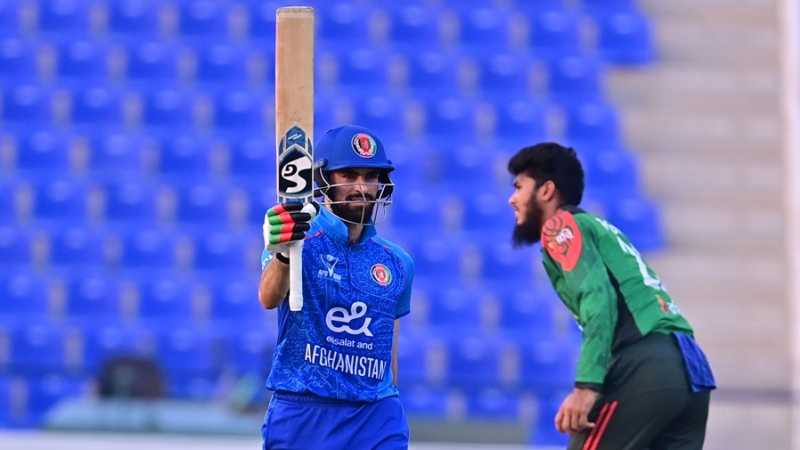
In ODI cricket, a strong powerplay does not necessarily mean scoring at an extremely high rate. Preserving wickets can be equally important because it allows a team to accelerate later. If Afghanistan or Bangladesh can reach the end of the opening ten overs with most of their top-order wickets intact, the middle overs become significantly easier to manage.
This is where intelligent strike rotation could become more valuable than constant boundary hitting. On a potentially slower UAE surface, batters who keep the scoreboard moving may ultimately outperform players who depend entirely on big shots.
Bowling Strategy and Middle-Overs Battle
The middle overs are likely to become the tactical center of the afg vs ban odi match. Afghanistan possess significant spin resources, while Bangladesh have experience playing spin and managing difficult scoring phases. Whoever controls overs 15 to 40 could gain a substantial advantage.
Afghanistan may attempt to create pressure through attacking fields and frequent spin changes. Bangladesh could respond by using sweeps, controlled aggression and quick running between the wickets. The key will be avoiding long periods without scoring because that can allow the bowling side to build pressure and eventually force a mistake.
The final ten overs will then become a separate contest. A team with wickets in hand can dramatically increase its scoring rate, whereas a side that loses several batters during the middle overs may struggle to finish strongly. This makes wicket preservation throughout the innings a central part of the tactical equation.
What Could Decide the Match?
Several factors could influence the result, but the most important will probably be the quality of batting against spin and the ability of each bowling attack to execute plans under pressure.
- Powerplay wickets and boundary control.
- Batting technique against spin during the middle overs.
- Partnership-building rather than relying on individual brilliance.
- Death-over bowling and finishing ability.
Neither team can afford to assume that its strongest department will automatically win the match. Afghanistan’s spin resources may be outstanding, but Bangladesh have the experience to counter them. Similarly, Bangladesh’s ODI experience can be valuable, but Afghanistan’s modern white-ball attack can punish even small tactical errors.
Importance for the ODI World Cup Cycle
The afg vs ban odi fixture also arrives at an important stage of the ODI calendar. The 2027 Men’s Cricket World Cup is scheduled to take place across South Africa, Zimbabwe and Namibia, with the tournament beginning in October 2027. Afghanistan have already been placed in a group alongside India, Australia, Pakistan, Zimbabwe and a qualifier, while Bangladesh are in a separate group.
That means every serious ODI assignment during this period can contribute to preparation for the global tournament. Teams need to establish combinations, test younger players and understand which tactical approaches work against different opposition. The UAE tri-series gives both Afghanistan and Bangladesh an opportunity to evaluate their squads in competitive conditions well before the World Cup.
For Afghanistan, continued improvement against established ODI opponents could strengthen their status as a genuine tournament threat. For Bangladesh, the series provides an opportunity to sharpen their limited-overs structure and build confidence against a team that has become increasingly difficult to beat.
Conclusion
The afg vs ban odi matchup promises to be a fascinating contest because neither side has an obvious advantage in every department. Bangladesh possess the stronger historical ODI record between the two teams, but Afghanistan have demonstrated their ability to win important matches and have assembled an impressive collection of white-ball talent. The UAE setting adds another layer of uncertainty because pitch behavior, evening conditions and spin could all influence the tactical battle. The October 21 meeting in Sharjah should therefore be viewed as more than just another fixture in a tri-nation series. Both teams will have an opportunity to test combinations, evaluate key players and develop their ODI plans ahead of the next major international cycle. Afghanistan’s bowling strength against Bangladesh’s batting discipline could be the central contest, while the side that handles the middle overs more effectively may ultimately gain control.