


Introduction
The Indian Premier League (IPL) brings together some of the most exciting cricket teams, and the contest between Sunrisers Hyderabad (SRH) and Lucknow Super Giants (LSG) is an excellent example of competitive T20 cricket. Both franchises have talented international players, powerful middle-order batters, experienced bowlers and match-winning performers. Their encounters often attract attention because of the contrasting strategies and aggressive playing styles they bring to the field.
The 2026 IPL meeting between these teams took place on 5 April 2026 at the Rajiv Gandhi International Stadium in Hyderabad. Lucknow Super Giants won the toss and elected to bowl first. Sunrisers Hyderabad managed to score 156 runs for nine wickets in 20 overs, but Lucknow successfully chased the target, finishing at 160/5 in 19.5 overs. LSG secured a five-wicket victory with one ball remaining, making it a closely contested encounter.
The match was particularly interesting because Heinrich Klaasen and Nitish Kumar Reddy produced important contributions for Hyderabad, while Rishabh Pant played a decisive role in Lucknow’s successful chase. Mohammed Shami also delivered an impressive bowling performance and earned the Player of the Match award. Looking at the complete scorecard helps explain how individual performances, partnerships and bowling spells influenced the final result.
Sunrisers Hyderabad vs Lucknow Super Giants Match Scorecard: Match Overview
The Sunrisers Hyderabad vs Lucknow Super Giants match scorecard provides a clear picture of how both teams performed during this IPL encounter. Hyderabad started with an aggressive batting approach but lost important wickets during the powerplay. The early dismissals prevented the team from establishing the strong foundation usually required to achieve a competitive T20 total.
However, the middle order helped SRH recover from the difficult beginning. Heinrich Klaasen and Nitish Kumar Reddy built an important partnership and kept the innings moving through attacking strokes. Their contributions helped Hyderabad reach 156/9, a total that gave its bowlers something to defend but ultimately proved insufficient against Lucknow’s batting lineup.
IPL 2026 – Match 10
5 April 2026 · Rajiv Gandhi International Stadium, Hyderabad
Sunrisers Hyderabad
156/9
20 overs
Lucknow Super Giants
160/5
19.5 overs
Result: Lucknow Super Giants won by 5 wickets.
Player of the Match: Mohammed Shami (2/9).
Toss: LSG elected to field.
Source: Official IPL match centre.
Sunrisers Hyderabad First Innings: Batting Performance
Sunrisers Hyderabad began its innings with the intention of scoring quickly, but the opening partnership did not develop as expected. Travis Head scored seven runs from eight deliveries before losing his wicket, while Abhishek Sharma was dismissed without scoring after facing just two balls. These early wickets gave Lucknow’s bowling attack an opportunity to control the innings.
Ishan Kishan also failed to make a substantial contribution, scoring just one run from four deliveries. Liam Livingstone made 14 runs from 20 balls but struggled to find the boundary consistently. With the top order losing wickets early, Hyderabad needed its middle-order batters to take responsibility and rebuild the innings.
Heinrich Klaasen became the most important batter for SRH. He scored 62 runs from 41 deliveries, including five fours and two sixes. His innings combined controlled batting with timely attacking shots. Nitish Kumar Reddy supported him brilliantly, contributing 56 runs from 33 balls, with three fours and five sixes. Their partnership helped Hyderabad recover and cross the 150-run mark.
The remaining batters could not add many runs towards the end. Aniket Verma remained not out on two, while Shivang Kumar scored five and Harshal Patel added four. Hyderabad eventually finished at 156/9 after completing its allotted 20 overs.
SRH Batting Scorecard
| Batter | Runs | Balls | 4s | 6s |
|---|---|---|---|---|
| Travis Head | 7 | 8 | 1 | 0 |
| Abhishek Sharma | 0 | 2 | 0 | 0 |
| Ishan Kishan | 1 | 4 | 0 | 0 |
| Liam Livingstone | 14 | 20 | 0 | 1 |
| Heinrich Klaasen | 62 | 41 | 5 | 2 |
| Nitish Kumar Reddy | 56 | 33 | 3 | 5 |
| Aniket Verma | 2* | 5 | 0 | 0 |
| Harsh Dubey | 0 | 1 | 0 | 0 |
| Shivang Kumar | 5 | 4 | 1 | 0 |
| Harshal Patel | 4 | 2 | 1 | 0 |
| Total | 156/9 | 20 overs |
*Not out. Extras: 5 runs. Figures based on the published match scorecard.
Lucknow Super Giants Bowling Performance
Lucknow Super Giants delivered a disciplined bowling performance, particularly during the opening overs. Mohammed Shami was one of the biggest reasons behind SRH’s difficult start. He picked up two wickets while conceding only nine runs in his four overs, producing an outstanding economy rate of 2.25. His ability to maintain accurate lines and lengths made it difficult for Hyderabad’s opening batters to score freely.
Prince Yadav also played an important role, taking two wickets and putting pressure on the middle and lower order. Avesh Khan picked up two wickets as well, while Digvesh Rathi and Manimaran Siddharth contributed one wicket each. Their collective effort prevented SRH from reaching a much bigger total.
The bowling unit also showed the importance of maintaining control in the middle overs. Even when Klaasen and Nitish Kumar Reddy started attacking, the bowlers continued looking for opportunities to break their partnership. Their efforts restricted Hyderabad to 156 runs, giving the LSG batting lineup a manageable target.
Lucknow Super Giants Second Innings: Successful Run Chase
Lucknow Super Giants entered the second innings with a target of 157 runs. The required run rate was manageable, but Hyderabad’s bowling attack had the potential to make the chase difficult. LSG needed a stable opening partnership and a strong contribution from its experienced middle-order batters.
Mitchell Marsh scored 14 runs from 12 deliveries before being dismissed. Aiden Markram provided a much stronger contribution, scoring 45 runs from 27 balls with six fours and two sixes. His attacking approach helped Lucknow maintain a healthy scoring rate and reduced pressure on the remaining batters.
Rishabh Pant was the standout performer of the chase. The LSG captain remained unbeaten on 68 runs from 50 deliveries, hitting nine boundaries. Rather than taking unnecessary risks, Pant balanced attacking cricket with sensible strike rotation. His innings provided stability whenever Lucknow lost a wicket and helped the team remain in control of the chase.
Ayush Badoni added 12 runs, while Nicholas Pooran scored one. Abdul Samad contributed 16 runs from 12 deliveries, and Mukul Choudhary remained unbeaten on two. Lucknow eventually reached 160/5 in 19.5 overs, winning the match with one ball remaining.
Important Contributions from LSG Batters
The successful chase was built around a few important individual performances. Pant’s unbeaten half-century was the biggest contribution, but Markram’s quick start also helped the team establish momentum. Abdul Samad’s useful runs further supported the chase during the later stages.
The Sunrisers Hyderabad vs Lucknow Super Giants match scorecard highlights how a successful T20 chase does not always depend on one batter scoring at an extremely high strike rate. Pant demonstrated that a player can control the innings through patience, calculated aggression and an understanding of the required target. His contribution ensured that Lucknow did not lose control despite some middle-order setbacks.
Sunrisers Hyderabad Bowling Performance
Sunrisers Hyderabad needed early wickets to defend its total successfully. Harsh Dubey was among the more effective bowlers, taking two wickets for 18 runs in four overs. His economical spell created some pressure on Lucknow’s middle order and prevented the batters from scoring freely against spin.
Eshan Malinga took one wicket in his four overs, while Shivang Kumar also picked up one wicket. However, the remaining bowling options struggled to contain Lucknow’s scoring. Jaydev Unadkat conceded 50 runs in 3.5 overs, making his spell particularly expensive. Nitish Kumar Reddy bowled one over and conceded 14 runs, while Harshal Patel gave away 16 runs in three overs.
Although Hyderabad managed to take five wickets, it could not dismiss the opposition before the target was reached. Pant’s ability to remain at the crease made the difference, especially when the required runs became achievable in the final overs.
Key Turning Points of the Match
Several moments played an important role in deciding the outcome. Although Hyderabad managed to post a respectable total after losing early wickets, Lucknow’s bowlers had already created pressure during the first half of the match. The early dismissals of Travis Head, Abhishek Sharma and Ishan Kishan prevented SRH from building the kind of opening partnership that could have changed the final score.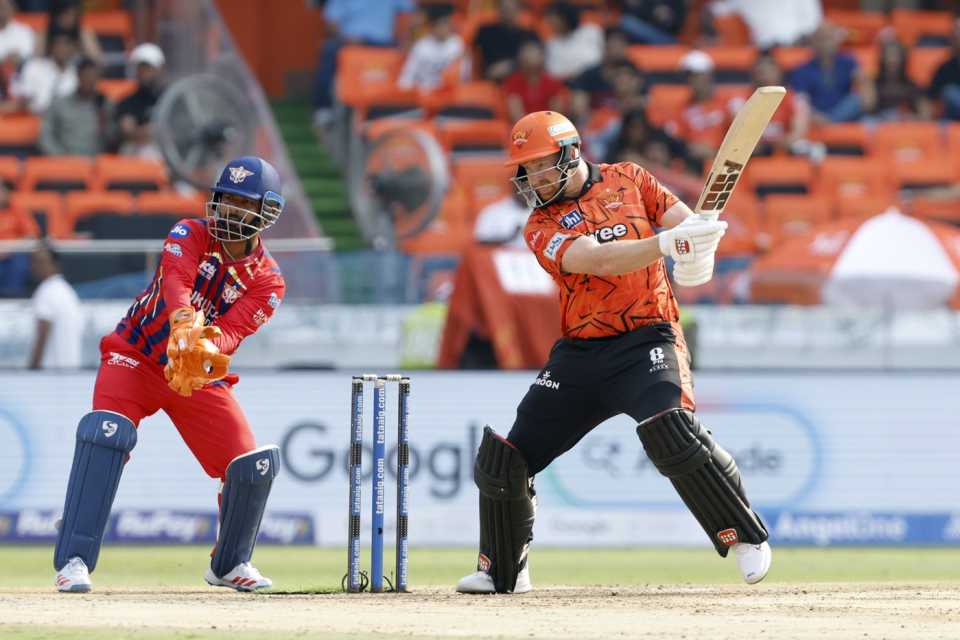
Another major turning point was the partnership between Heinrich Klaasen and Nitish Kumar Reddy. Both players understood the importance of rebuilding the innings and then increasing the scoring rate. Their combined contribution of 118 runs helped Hyderabad recover from its poor start. However, Lucknow’s bowlers restricted the remaining batters and prevented SRH from finishing with a much bigger score.
The biggest difference came during the second innings when Rishabh Pant took control of the chase. His unbeaten 68-run contribution ensured that Lucknow remained competitive throughout the innings. Aiden Markram’s 45 runs also played an important role in reducing the pressure on the captain.
Three Major Match Highlights
-
Mohammed Shami’s bowling: His impressive figures of 2/9 restricted Hyderabad during the opening overs.
-
Middle-order partnership: Heinrich Klaasen and Nitish Kumar Reddy scored important half-centuries for SRH.
-
Rishabh Pant’s match-winning innings: His unbeaten 68 runs guided LSG to victory.
Player of the Match: Mohammed Shami
Mohammed Shami received the Player of the Match award for his outstanding bowling performance. His figures of two wickets for just nine runs in four overs demonstrated excellent control and accuracy. In T20 cricket, restricting the opposition’s scoring rate during the powerplay can have a significant impact on the final result, and Shami performed that responsibility exceptionally well.
His early breakthroughs put Hyderabad under pressure and forced the middle-order batters to rebuild the innings. Although Klaasen and Nitish Kumar Reddy eventually produced a strong partnership, Shami’s economical spell helped Lucknow maintain control over the contest. His performance was particularly valuable because Hyderabad had several dangerous attacking players in its batting lineup.
Head-to-Head Record Between SRH and LSG
Sunrisers Hyderabad and Lucknow Super Giants have developed an interesting rivalry since LSG joined the IPL in 2022. Their matches have featured high-scoring innings, impressive bowling performances and some memorable individual contributions. Both teams have demonstrated the ability to defeat each other, making their encounters competitive.
One particularly memorable meeting took place on 8 May 2024, when Hyderabad defeated Lucknow by 10 wickets after chasing 166 runs without losing a wicket. In the 2025 season, SRH also defeated LSG by six wickets while chasing 206 runs. Lucknow, however, won their 2026 encounter by five wickets, demonstrating that previous results do not necessarily determine the outcome of a new match.
The historical results also highlight the importance of understanding conditions, team combinations and match situations. A team that performs well at its home venue may face a different challenge when playing away. Therefore, the Sunrisers Hyderabad vs Lucknow Super Giants match scorecard is useful not only for reviewing individual performances but also for understanding how the rivalry continues to develop.
What the Match Reveals About Both Teams
Sunrisers Hyderabad’s Strengths and Weaknesses
Hyderabad demonstrated that its middle order has the ability to recover from difficult situations. Klaasen and Nitish Kumar Reddy showed excellent attacking potential, particularly against bowling that offered opportunities to score boundaries. Their ability to hit sixes and maintain a healthy scoring rate helped SRH reach a competitive position after losing early wickets.
However, the team’s top-order batting performance was a major concern. Losing three wickets for very few runs made it difficult to build a strong foundation. The bowling unit also needed better support from its experienced options during the run chase. Improving these areas could help Hyderabad perform more consistently in future matches.
Lucknow Super Giants’ Strengths and Weaknesses
Lucknow’s biggest strength in this encounter was its balanced performance. The bowlers controlled Hyderabad’s scoring during the powerplay, while the batting lineup successfully chased the target. Mohammed Shami’s economical spell and Rishabh Pant’s unbeaten innings demonstrated the importance of experienced performers in pressure situations.
However, losing five wickets during a relatively modest chase showed that the batting unit still had areas to improve. A more comfortable chase would have reduced the pressure on the middle order and lower-order players. Nevertheless, securing the victory was the most important achievement for LSG.
Why Match Scorecards Are Important for Cricket Fans
A cricket scorecard is much more than a record of runs and wickets. It provides detailed information about the performance of individual players and the overall progress of a match. Fans can understand which batter contributed the most, which bowler controlled the scoring rate and how partnerships influenced the result.
For example, someone reviewing the Sunrisers Hyderabad vs Lucknow Super Giants match scorecard can immediately identify Klaasen and Nitish Kumar Reddy as Hyderabad’s leading run-scorers. Similarly, Pant’s unbeaten 68 and Shami’s economical bowling figures explain why Lucknow emerged victorious.
Scorecards are also useful for cricket analysts, fantasy cricket followers and people interested in understanding team combinations. Strike rates, economy rates, boundaries and bowling figures provide valuable information that can help explain the difference between winning and losing performances.
Conclusion
The IPL 2026 encounter between Sunrisers Hyderabad and Lucknow Super Giants was an entertaining contest featuring important individual performances and a closely fought run chase. Hyderabad recovered from an early batting collapse through impressive contributions from Heinrich Klaasen and Nitish Kumar Reddy, finishing with 156/9 in 20 overs. However, Lucknow responded confidently and reached 160/5 in 19.5 overs to secure a five-wicket victory.
Rishabh Pant’s unbeaten 68 was the defining batting performance, while Mohammed Shami’s exceptional figures of 2/9 played a crucial role in restricting Hyderabad. Aiden Markram also made a valuable contribution with 45 runs, helping establish the foundation for the successful chase.
Overall, the Sunrisers Hyderabad vs Lucknow Super Giants match scorecard demonstrates how partnerships, bowling discipline and smart decision-making can influence the outcome of a T20 match. For cricket enthusiasts, this encounter offers plenty of interesting performances to analyse and highlights the competitive nature of the IPL.