
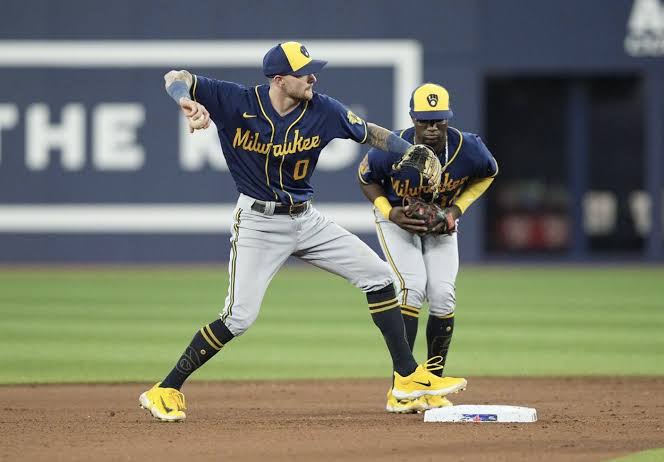

The Milwaukee Brewers standings help baseball fans understand where the team ranks in the National League Central, how it compares with its division rivals, and what its position means for the MLB playoff race. Whether you follow the Brewers throughout the regular season or check their results before an important series, understanding the standings provides a clearer picture of the team’s progress.
The standings reflect more than wins and losses. They also reveal winning percentage, games behind the division leader, recent performance, and the competitive gap between teams. For fans following the Milwaukee Brewers during the 2026 MLB season, these numbers offer a practical way to evaluate the team’s position and postseason chances. Because standings change after games are completed, the latest official results should always be checked before relying on a particular ranking.
This guide explains how the Milwaukee Brewers standings work, which statistics matter most, how the National League Central race affects playoff qualification, and how to interpret the numbers throughout the season.
Understanding the Milwaukee Brewers Standings
The Milwaukee Brewers compete in Major League Baseball’s National League Central division. Their division position depends primarily on their overall win-loss record compared with the other teams in the division. Every completed game can influence the standings, making the race more competitive as the regular season progresses.
A team with more wins and a stronger winning percentage generally occupies a higher position. However, the standings can become more complicated when teams have similar records. Games behind, head-to-head results, and official MLB tiebreaking procedures may become important when determining division rankings or postseason qualification.
The standings also help fans distinguish between a strong overall season and a successful division campaign. A team may have a winning record but still face pressure from a close rival. Conversely, a club that starts slowly can improve its position through consistent performances over the remaining schedule.
What Information Appears in MLB Standings?
|
Statistic |
What It Means |
|---|---|
|
W (Wins) |
Games the team has won |
|
L (Losses) |
Games the team has lost |
|
PCT (Winning Percentage) |
Wins divided by total games played |
|
GB (Games Behind) |
Distance from the division leader, expressed in games |
|
RS (Runs Scored) |
Total runs the team has scored |
|
RA (Runs Allowed) |
Total runs opponents have scored against the team |
|
DIFF (Run Differential) |
Runs scored minus runs allowed |
|
STRK (Streak) |
Consecutive wins or losses |
|
L10 (Last 10) |
Results across the team’s most recent ten games |
These statistics work together to provide a more complete picture of team performance. For example, two teams may have similar records, but one could have a better run differential or stronger recent results. Such indicators can help fans assess performance, although they do not guarantee future success.
Milwaukee Brewers Standings in the National League Central
The National League Central is the Brewers’ primary division competition during the regular season. Their position is measured against the Chicago Cubs, Cincinnati Reds, Pittsburgh Pirates, and St. Louis Cardinals.
Each division matchup carries added importance because it affects both teams involved. Winning a series against a nearby rival can improve Milwaukee’s record while preventing that opponent from gaining ground. These games can become especially significant late in the season, when only a small number of contests remain.
Key Division Rivals
-
Chicago Cubs: The Cubs are a major divisional rival, and their head-to-head matchups can influence the race for first place.
-
Cincinnati Reds: Cincinnati can challenge the Brewers for division position through consistent pitching, timely hitting, and strong series results.
-
Pittsburgh Pirates: Pittsburgh’s performance can affect the division’s overall balance and create important opportunities in direct matchups.
-
St. Louis Cardinals: The Cardinals are another established rival whose results against Milwaukee can influence the standings.
The exact order of these teams changes during the season. A reliable standings analysis should use current records rather than assume that a team will finish in a particular position based on its reputation or previous seasons.
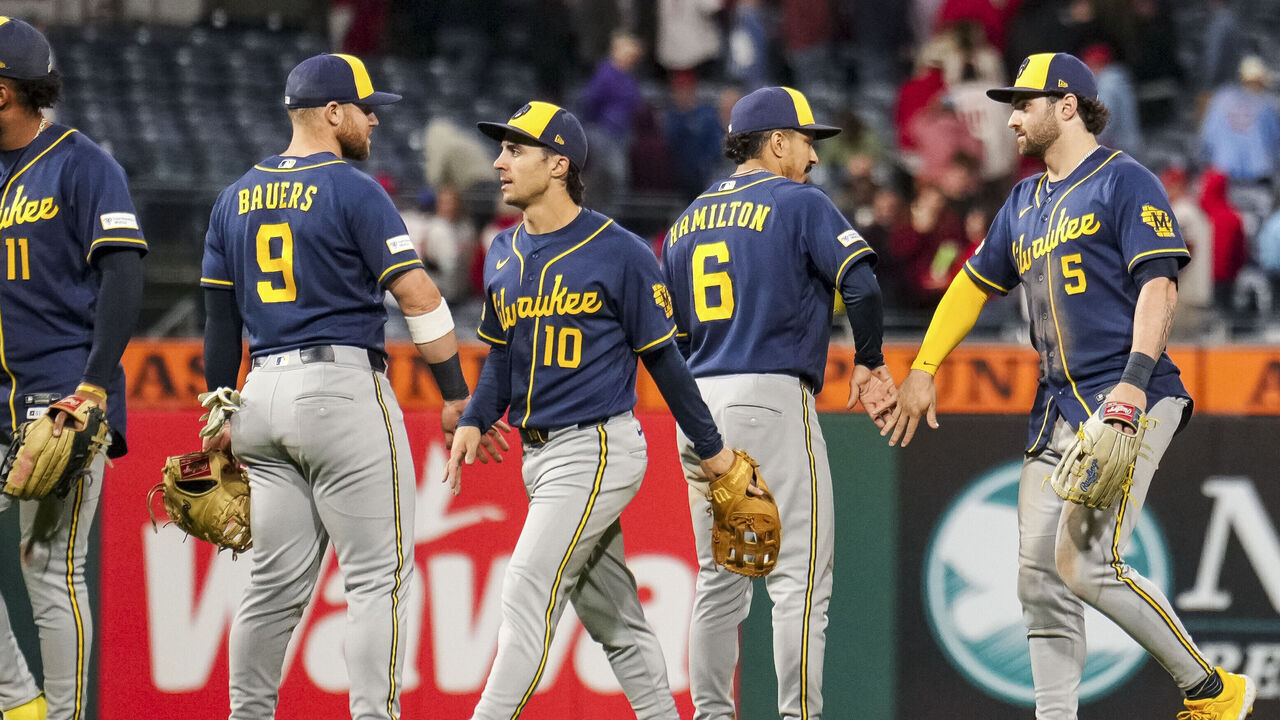
Milwaukee Brewers 2026 Regular-Season Standings
The Brewers finished the 2026 regular season with a 103–59 record, according to the published MLB standings. That record represents a .636 winning percentage and placed Milwaukee first in the National League Central, ahead of the Chicago Cubs. The club also entered the postseason with a strong overall record and a substantial lead over its division rivals.
The following table summarizes the final NL Central standings for 2026.
|
Rank |
Team |
Wins |
Losses |
Winning % |
Games Behind |
|---|---|---|---|---|---|
|
1 |
Milwaukee Brewers |
103 |
59 |
.636 |
— |
|
2 |
Chicago Cubs |
89 |
73 |
.549 |
14.0 |
|
3 |
Pittsburgh Pirates |
82 |
80 |
.506 |
21.0 |
|
4 |
St. Louis Cardinals |
77 |
85 |
.475 |
26.0 |
|
5 |
Cincinnati Reds |
75 |
87 |
.463 |
28.0 |
Milwaukee’s 103 victories gave the team a 14-game advantage over Chicago, the division’s second-place finisher. Its winning percentage was also substantially higher than those of the other four NL Central clubs.
These results show why the final standings are useful for evaluating a season. Rather than relying on individual game highlights, fans can compare complete records and see the distance between the division winner and its closest competitors.
How to Read the Brewers’ Winning Percentage and Games Behind
Two of the most useful statistics when checking Milwaukee’s position are winning percentage and games behind. They help explain a team’s standing beyond its raw win total.
Winning Percentage
Winning percentage measures how frequently a team wins its games. It is calculated by dividing wins by total games played.
For Milwaukee’s 2026 regular season:
103 wins ÷ 162 games = approximately .636.
This means the Brewers won about 63.6% of their regular-season games. Winning percentage makes it easier to compare teams that have played different numbers of games, particularly earlier in the season when rainouts and rescheduled fixtures can create differences in games played.
Games Behind
Games behind, often abbreviated as GB, measures the distance between a team and the division leader. A smaller number means a team is closer to first place.
The Brewers finished 14 games ahead of the Cubs in the NL Central standings. During the season, this figure would have changed whenever Milwaukee or its competitors won or lost games.
Fans should remember that games behind is not the same as the number of games remaining. A team can be several games behind with enough opportunities to catch up, or it can have too few remaining games to overcome the gap.
What the Brewers’ Standings Reveal About Team Performance
A final position tells only part of the story. Looking at run differential, home and away records, and recent results can provide additional insight into how Milwaukee performed.
Run Differential
Run differential is the difference between the number of runs a team scores and the number it allows. A positive figure means the team scored more runs than its opponents over the period measured.
Milwaukee scored 832 runs and allowed 618 during the 2026 regular season, producing a run differential of +214.
That positive margin offers useful context for the team’s winning record. It indicates that Milwaukee did more than narrowly accumulate victories; across the full season, the team scored considerably more runs than it conceded.
However, run differential is not a guarantee of postseason success. Baseball games can be decided by one swing, a defensive mistake, or a strong relief appearance. A team’s regular-season numbers describe its previous performance, not the result of its next game.
Home and Away Results
Home and away records help show whether a team performed consistently in different environments. Home games provide familiar surroundings and the support of local fans, while road games require teams to adjust to different ballparks, travel schedules, and opposing crowds.
For a complete assessment of the Brewers, fans can compare their home record with their away record and consider whether either pattern changes during important stretches of the schedule.
Recent Form
The last-ten-games statistic, often shown as L10, measures performance across a team’s ten most recent games. A winning streak can indicate that a club is playing well at a particular moment, while a losing streak may highlight an area that needs attention.
Still, short-term form should be viewed alongside the full-season record. A team with a strong overall season can experience a brief slump, and a short winning streak does not necessarily mean that its longer-term problems have disappeared.

How the Brewers’ Standings Affect the MLB Playoffs
The National League standings help determine which teams advance to the postseason and how they are seeded. A strong regular-season record can provide an important advantage, particularly for division winners.
Under MLB’s playoff format, six teams from each league qualify: three division winners and three Wild Card teams. The two division winners with the best records in each league receive byes into the Division Series. The remaining division winner and the three Wild Card teams compete in the best-of-three Wild Card Series.
Milwaukee’s 2026 regular-season record secured the NL Central title. The Brewers subsequently advanced past the San Diego Padres in the National League Division Series and moved on to the National League Championship Series against the Los Angeles Dodgers.
This progression demonstrates why standings matter: they establish regular-season positioning, while postseason games determine which team advances toward the World Series.
Division Title vs. Wild Card Qualification
There are two main routes into the National League playoffs.
-
Division title: Finish first in the NL Central, NL East, or NL West.
-
Wild Card qualification: Finish among the three qualifying non-division-winning teams based on the league’s standings.
Winning the division guarantees a postseason place, but it does not automatically guarantee a first-round bye. That depends on the division winners’ records relative to one another.
Where to Check Milwaukee Brewers Standings
When following the Milwaukee Brewers, it is important to use a standings source that distinguishes regular-season records from postseason results. The regular-season table answers questions about division position, while postseason brackets show the progress of teams competing for the championship.
Fans should look for the following information when reviewing the standings:
-
Season selection: Confirm that the displayed season is 2026 rather than a previous year.
-
Standings category: Check whether the page shows division, Wild Card, or overall league standings.
-
Last updated date: Confirm that the information reflects the latest completed games or the final regular-season results.
-
Record and winning percentage: Compare wins, losses, and percentage rather than judging a team by wins alone.
-
Postseason status: Distinguish between a clinched playoff berth, a division title, and advancement through a playoff round.
During the regular season, checking standings after a series can be more informative than reacting to every individual result. It helps fans see whether a team’s position is changing consistently or whether a temporary swing has affected the table.
Common Mistakes When Following MLB Standings
Understanding baseball standings is straightforward once you know the terminology, but a few common mistakes can lead to incorrect conclusions.
Confusing Division Standings With Wild Card Standings
A team may rank second in its division but still hold a strong Wild Card position. Conversely, a division leader may have a weaker overall record than another division winner. These tables answer different questions and should not be treated as interchangeable.
Ignoring Games Played
Two teams can have similar win totals but different numbers of games played. Always check the win-loss record and winning percentage before drawing conclusions about which team is performing better.
Treating Recent Form as a Season-Wide Measure
A team that wins seven of its last ten games is performing well over that short stretch, but those results do not replace its complete record. Use recent form to add context rather than as the only measure of success.
Assuming Standings Predict Playoff Results
Regular-season performance helps determine qualification and seeding, but postseason baseball is a separate competition. Starting pitching, bullpen execution, defensive performance, and timely hitting can all influence a short series.
How Fans Can Track the Brewers Throughout the Season
A simple routine can make following the standings more useful. Start by reviewing Milwaukee’s overall record, then compare its position with the other NL Central teams. Next, examine recent results, run differential, and upcoming opponents to understand what might affect the team’s next stretch of games.
It is also helpful to follow individual player performance alongside the standings. A team’s record reflects collective results, while batting statistics, pitching effectiveness, injuries, and roster changes can help explain why those results are improving or declining.
For fans in Milwaukee and across the United States, the standings provide a common reference point for discussing the team’s progress. Whether following the club during a divisional race or evaluating its postseason journey, these figures help put individual performances into a broader competitive context.
Frequently Asked Questions
1. Where do the Milwaukee Brewers stand in the NL Central?
The Brewers finished first in the 2026 NL Central with a 103–59 regular-season record and a .636 winning percentage. They finished 14 games ahead of the Chicago Cubs.
2. What was the Milwaukee Brewers’ 2026 win-loss record?
Milwaukee finished the 2026 regular season with 103 wins and 59 losses, giving the team a .636 winning percentage.
3. Which teams compete with the Brewers in the NL Central?
The Brewers’ NL Central division rivals are the Chicago Cubs, Cincinnati Reds, Pittsburgh Pirates, and St. Louis Cardinals.
4. What does GB mean in Milwaukee Brewers standings?
GB stands for games behind. It measures how far a team is behind the division leader in the standings. The division leader is generally shown with a dash instead of a games-behind figure.
5. Did the Milwaukee Brewers reach the 2026 MLB postseason?
Yes. Milwaukee won the NL Central, advanced past the San Diego Padres in the Division Series, and reached the National League Championship Series against the Los Angeles Dodgers.
Conclusion
The Milwaukee Brewers standings provide an effective way to evaluate the team’s performance, division position, and postseason progress. Milwaukee finished the 2026 regular season at 103–59, won the NL Central, and advanced to the National League Championship Series.
To understand the full picture, fans should consider winning percentage, games behind, run differential, recent form, and the difference between regular-season rankings and playoff results. These figures help explain where the Brewers stand and how their season compares with those of their rivals.
Following the standings alongside game results and player performances gives baseball fans a more complete understanding of Milwaukee’s progress. The key is to use current, clearly dated information and interpret the numbers in the context of the competition.