
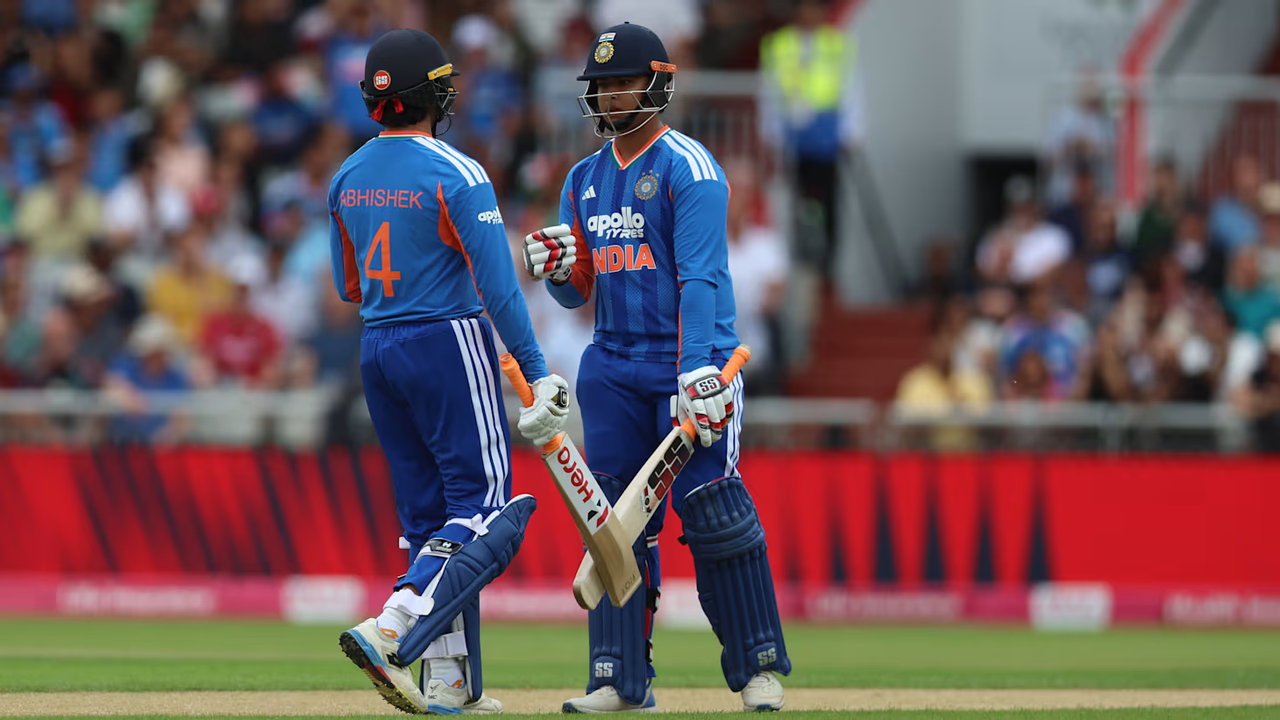

The India vs West Indies T20 rivalry has entered another exciting chapter in 2026, with both teams competing in a five-match T20I series in India. The contest follows a three-match ODI series between the same sides and has already produced an emphatic opening result. India began the T20I campaign with a dominant eight-wicket victory in Lucknow, taking an early 1–0 lead in the series.
The opening match provided plenty of reasons for cricket followers to watch the remainder of the series closely. India successfully chased 172 with 32 balls remaining, while captain Shreyas Iyer produced a spectacular unbeaten century. West Indies showed glimpses of their batting strength through Shai Hope and Sherfane Rutherford, but India’s bowling attack kept the visitors under pressure for most of the innings.
The India vs West Indies T20 series is also significant because it gives both teams an opportunity to test combinations, develop younger players and assess their T20 strategies in competitive conditions. With four matches still scheduled after the opening game, the series can develop in several different directions depending on how West Indies respond and whether India can maintain its early momentum.
Current India vs West Indies T20 Series Scenario
The first T20I was played at the Bharat Ratna Shri Atal Bihari Vajpayee Ekana Cricket Stadium in Lucknow on October 6, 2026. India won the toss and elected to bowl, and that decision eventually proved effective. West Indies were bowled out for 171 in 19.1 overs after a promising middle-order recovery. India then chased the target in only 14.4 overs, finishing at 172/2.
Shreyas Iyer was the standout performer. The Indian captain smashed an unbeaten 102 from just 43 deliveries, producing a powerful combination of boundaries and sixes. His innings transformed what could have been a competitive chase into a comfortable victory. Ishan Kishan also played an important supporting role with an unbeaten 37, allowing India to recover smoothly after early wickets.
For West Indies, Shai Hope scored 52 while Sherfane Rutherford contributed 56. Their partnership temporarily gave the visitors hope of reaching a much larger total, but India’s bowlers returned strongly during the latter stages. Naman Dhir, making his T20I debut, took three wickets, while Kuldeep Yadav and Axar Patel claimed two wickets each.
Series Schedule and Venues
The five-match T20I series is being played across five Indian venues. After the opening match in Lucknow, the teams move to Ranchi, Indore, Hyderabad and Bengaluru. All five matches are scheduled as part of India’s home series against West Indies.
| Match | Date | Venue | Series Position |
|---|---|---|---|
| 1st T20I | October 6, 2026 | Lucknow | India won by 8 wickets |
| 2nd T20I | October 9, 2026 | Ranchi | Upcoming |
| 3rd T20I | October 11, 2026 | Indore | Upcoming |
| 4th T20I | October 14, 2026 | Hyderabad | Upcoming |
| 5th T20I | October 17, 2026 | Bengaluru | Upcoming |
The second match is scheduled for October 9 at the JSCA International Stadium Complex in Ranchi. The third will be played at Holkar Stadium in Indore on October 11, followed by matches in Hyderabad on October 14 and Bengaluru on October 17.
This schedule creates an interesting challenge for both teams because the conditions can vary considerably from one venue to another. A side that adapts quickly to pitch behavior, boundaries, dew and match situations will have an advantage as the series progresses.
India’s Batting Strength
India’s batting remains one of the biggest talking points of the series. The opening game demonstrated how quickly the team can accelerate once its middle order settles. Although Abhishek Sharma and Sanju Samson were dismissed relatively early, Ishan Kishan and Shreyas Iyer prevented the situation from becoming difficult.
Iyer’s innings was particularly important because it combined control with aggressive stroke play. Rather than taking unnecessary risks immediately, he built the chase before launching into an extraordinary attacking phase. His unbeaten century also demonstrated the importance of having a batter capable of controlling the chase while maintaining a very high scoring rate.
The India vs West Indies T20 contest could therefore become an excellent opportunity for India’s batting unit to experiment with different combinations. Players such as Abhishek Sharma, Ishan Kishan, Sanju Samson, Tilak Varma and Shivam Dube provide different styles of batting, giving the team considerable flexibility.
India’s announced T20I squad includes several established players alongside younger names, including Vaibhav Sooryavanshi and Naman Dhir. The squad also features Axar Patel, Kuldeep Yadav, Washington Sundar, Ravi Bishnoi, Arshdeep Singh and Mayank Yadav, giving the team multiple options across batting, spin, pace and all-round roles. icc
West Indies Need a Stronger Finish
West Indies’ first innings showed both promise and weakness. The team lost three wickets during the powerplay, leaving the middle order with considerable pressure. Shai Hope and Sherfane Rutherford responded impressively, but the team could not convert that recovery into a competitive total.
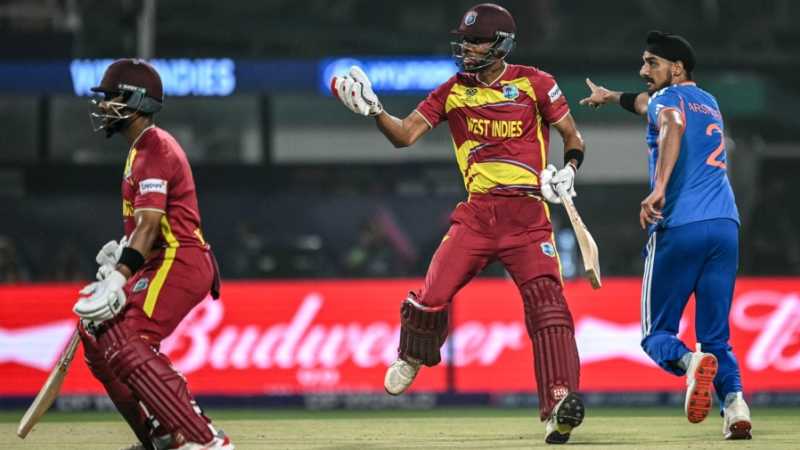
In T20 cricket, the final five overs often determine whether a team finishes around 160, 180 or beyond 200. West Indies reached 171, but losing wickets during the closing phase prevented them from applying maximum pressure on India’s batting lineup. Against a side capable of aggressive chasing, 171 was always going to require exceptional bowling.
The second match will therefore be particularly important for the West Indies. Their top order needs to provide a more stable foundation, while their middle order must continue attacking without allowing wickets to fall in clusters. Their bowling unit will also need to find ways to challenge India’s strong middle order.
West Indies have traditionally produced players who can change T20 matches rapidly through power hitting and attacking bowling. The challenge is turning those individual strengths into a complete 20-over performance. Against India, small mistakes can become significant because India’s batting depth and bowling variety allow it to recover quickly.
Key Players to Watch
Several players could influence the direction of the remaining matches. For India, Shreyas Iyer has immediately established himself as the central figure after his outstanding first-match performance. His leadership will also be closely watched because he is captaining the T20I side during this series.
Ishan Kishan is another player who can become important as the series develops. His ability to attack pace while also rotating the strike makes him valuable in different match situations. Abhishek Sharma can provide explosive starts, while players such as Tilak Varma and Shivam Dube offer additional batting depth.
With the ball, Arshdeep Singh remains an important option with the new ball and at the death. Kuldeep Yadav and Axar Patel give India contrasting spin options, while Mayank Yadav brings pace that can change the rhythm of an innings. The emergence of Naman Dhir is another storyline worth following after his three-wicket performance on debut.
For West Indies, Shai Hope and Sherfane Rutherford are already among the most important names after their half-centuries in the first match. Their ability to build partnerships while maintaining a healthy scoring rate will be crucial. The West Indies bowling attack will also need to improve its execution against India’s aggressive batters.
Why the Middle Overs Could Decide the Series
T20 matches are often won or lost during moments that do not receive as much attention as the powerplay or final overs. The middle overs are particularly important because this is when batting teams attempt to build partnerships while bowlers try to prevent acceleration.
India’s use of spin could become a major factor at different venues. Kuldeep Yadav and Axar Patel can attack the stumps, vary their pace and create pressure through dot balls. When combined with India’s pace options, this gives the captain several ways to control the middle part of an innings.
West Indies will need to ensure that their batters do not allow long periods of low scoring against India’s spinners. At the same time, their bowlers must avoid predictable lengths against India’s aggressive middle order. The team that wins these tactical battles may gain a decisive advantage.
The India vs West Indies T20 series is particularly interesting because both teams have players capable of turning a quiet five-over period into a high-scoring phase. That makes partnerships and bowling changes extremely important.
Young Players and Team Development
Another important feature of the series is India’s willingness to provide opportunities to emerging players. Naman Dhir received his T20I debut in the opening match, while Vaibhav Sooryavanshi is part of the squad even though he was not selected for the first game. The selection approach indicates that India is continuing to evaluate its wider pool of T20 talent.
This development is valuable because international T20 cricket demands more than individual talent. Young players need experience handling pressure, adapting to different conditions and understanding how to construct an innings or bowling spell according to the match situation.
West Indies also have a strong tradition of developing T20 specialists. Their players frequently appear in franchise cricket around the world, giving them experience in different conditions and tactical environments. The challenge is translating that experience into consistent international performances.
What India Must Improve
Despite winning the opening match comfortably, India still has areas to refine. Losing two early wickets during the chase shows that the top order can be tested when opponents execute their plans correctly. A stronger powerplay could make future chases even more straightforward.

The bowling department was effective overall, but West Indies managed to recover from 44/3 and establish a meaningful partnership. India will therefore want to prevent opposition batters from rebuilding so effectively in the next match. Early breakthroughs are valuable, but converting them into sustained pressure is even more important.
India’s depth means the team can make adjustments without significantly weakening its overall balance. However, T20 cricket rewards consistency, and the management will likely focus on finding a combination that can perform across different venues rather than relying on one outstanding individual performance.
What West Indies Must Change
West Indies need a better start with the bat. Losing three wickets early made their innings dependent on the middle order, and although Hope and Rutherford performed strongly, the recovery came too late to produce a truly imposing total.
Their bowlers also need greater discipline. India’s chase demonstrated how quickly a strong batter can take control when there are scoring opportunities. Restricting boundaries during the middle overs and creating pressure through dot balls could force India into riskier shots.
The visitors should also focus on partnerships. T20 cricket does not require every batter to attack from the first ball. A well-built partnership can create a platform for a powerful final five overs, something West Indies could not fully achieve in Lucknow.
Historical Context and Recent Form
India entered the current T20I series with confidence after winning the T20 World Cup Super Eight encounter against West Indies earlier in 2026. India won that match at Eden Gardens by five wickets, with Sanju Samson producing a remarkable 97.
The broader 2026 home series has been competitive in the ODI format, despite India winning two of the three matches. West Indies won the third ODI in New Chandigarh by five wickets after chasing India’s 351, demonstrating that the visitors remain capable of producing strong performances against India.
That recent history makes the current T20 series more interesting than the opening result alone suggests. India has momentum, but West Indies have already shown during the ODI leg that they can respond after setbacks.
Expectations for the Remaining Matches
The second T20I in Ranchi will be an important test of whether West Indies can immediately correct their mistakes. If they can produce a stronger powerplay and defend a higher total, the series could become much more competitive.
India, meanwhile, will look to build on the confidence generated by the eight-wicket victory. Another win would place the hosts in a commanding position and put significant pressure on West Indies before the matches in Indore, Hyderabad and Bengaluru.
The India vs West Indies T20 series should therefore not be judged only by the opening match. Five T20Is provide enough opportunities for momentum to change, players to emerge and tactical approaches to evolve. A team that adapts fastest is likely to gain the biggest advantage.
Conclusion
The current India vs West Indies T20 series has started with a clear statement from India. The hosts dominated the first match, restricting West Indies to 171 before completing the chase in only 14.4 overs. Shreyas Iyer’s unbeaten 102 was the defining performance, while India’s bowling unit showed enough variety to recover whenever West Indies threatened to build momentum. However, the series is far from over. West Indies have experienced batters capable of producing explosive performances, and their response in Ranchi will reveal whether the opening defeat was simply a poor start or a sign of a larger problem. India will also want to maintain its standards rather than becoming complacent after a comfortable victory.