
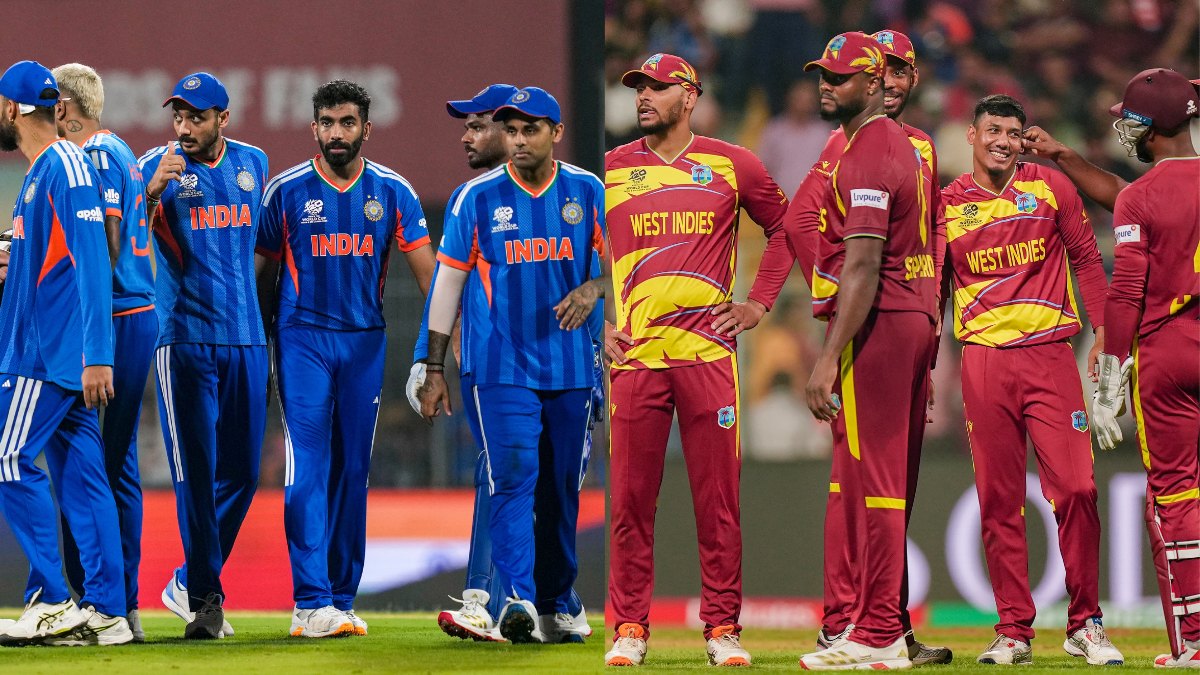

The IND vs WI contest has always carried a distinctive place in international cricket because it brings together two teams with contrasting cricketing traditions. India generally enters such contests with a deep batting lineup, multiple bowling options and considerable home support, while West Indies continue to bring their trademark power, athleticism and fearless approach to the shortest format. The latest series in India is particularly interesting because both sides are moving through an important phase of their white-ball development.
The current 2026 tour has already produced plenty of drama. The teams first met in a three-match ODI series, where India won the opening two games before West Indies produced an impressive response in the third match. West Indies chased down India’s 351-run total in New Chandigarh, winning by five wickets and preventing a clean sweep. The result demonstrated that the Caribbean side remains capable of challenging India even after falling behind in a series.
The focus has now shifted toward a five-match T20I series. India won the opening T20I in Lucknow by eight wickets after an outstanding unbeaten century from Shreyas Iyer. With four matches still to play, the series provides both teams with an opportunity to test combinations, develop younger players and build momentum for future international competitions.
IND vs WI: Current Series Situation
The ongoing contest has already shown why this matchup remains entertaining across formats. India’s ODI campaign looked highly convincing during the first two games. India won the opening ODI by eight wickets in Thiruvananthapuram and repeated the same winning margin in Guwahati after chasing 406 successfully. Those performances suggested that India’s batting depth and ability to handle large run chases were major strengths.
However, West Indies responded strongly in the third ODI. India scored 351 for seven, but West Indies reached 352 for five with 10 balls remaining. Shai Hope played the central role in that chase with an unbeaten 162, turning what could have been another Indian victory into a memorable Caribbean comeback. The result also showed that West Indies can create pressure through aggressive batting when their top and middle order remain together.
The first T20I followed a very different pattern. West Indies made 171 before being bowled out in 19.1 overs. India then chased the target in only 14.4 overs, finishing at 172 for two. Shreyas Iyer’s unbeaten 102 from 43 balls was the defining performance, while Ishan Kishan provided valuable support during the successful chase. India’s bowling attack had earlier restricted West Indies after the visitors reached 44 for three during the powerplay.
Upcoming T20I Matches and Schedule
The five-match T20I series is spread across several major Indian cricket venues. After the opening match in Lucknow on October 6, the second game is scheduled for October 9 at Ranchi. The third match follows in Indore on October 11, while Hyderabad hosts the fourth encounter on October 14. The series finale is scheduled for October 17 in Bengaluru.
| Match | Date | Venue | Status |
|---|---|---|---|
| 1st T20I | October 6 | Lucknow | India won by 8 wickets |
| 2nd T20I | October 9 | Ranchi | Upcoming |
| 3rd T20I | October 11 | Indore | Upcoming |
| 4th T20I | October 14 | Hyderabad | Upcoming |
| 5th T20I | October 17 | Bengaluru | Upcoming |
The schedule creates an interesting tactical challenge. With matches coming relatively quickly, teams have limited time to make adjustments between games. A bowling combination that works in one venue may need modification elsewhere because pitch conditions, boundaries and evening conditions can influence T20 cricket considerably.
India’s Strengths in the T20 Format
India’s greatest advantage in this series is the depth available throughout the batting order. The first T20I provided a perfect example. Even though India lost early wickets, Shreyas Iyer and Ishan Kishan were able to take control and finish the chase comfortably. Such depth allows India to absorb early setbacks without immediately losing control of the innings.
India also possesses considerable variety with the ball. Arshdeep Singh can provide movement and left-arm variation, while spinners such as Kuldeep Yadav and Axar Patel offer different methods of controlling the middle overs. Players such as Mayank Yadav can add pace, while all-round options provide the captain with additional flexibility when match conditions change.
Another important factor is India’s ability to accelerate during different phases. Rather than relying exclusively on one explosive opener, the team can rebuild after early wickets and then attack heavily during the middle and death overs. That flexibility is particularly valuable against West Indies because Caribbean bowlers often look to break partnerships through variations in pace and length.
West Indies’ Biggest Threats
West Indies remain dangerous because of their natural attacking approach. Their batting lineup contains players capable of changing a match within a few overs. Shai Hope demonstrated this during the third ODI, while Sherfane Rutherford also made an important contribution during the first T20I. Hope scored 52 and Rutherford added 56 as West Indies recovered from early pressure to reach 171.

The biggest challenge for West Indies is converting individual bursts of brilliance into complete team performances. In the first T20I, losing three wickets for 44 during the powerplay placed them under significant pressure. Although Hope and Rutherford rebuilt the innings, India eventually regained control and dismissed the remaining batters before the 20-over mark.
For West Indies, the ideal formula will be to preserve wickets during the first six overs while maintaining enough scoring momentum. If their middle order enters the final five overs with several wickets available, the team has enough power to produce very competitive totals.
Key Players Who Could Shape the Series
Shreyas Iyer’s Leadership and Batting
Shreyas Iyer immediately made an impact in the T20I series by scoring an unbeaten 102 from only 43 deliveries. His innings contained both calculated strokeplay and aggressive hitting, allowing India to chase 172 with significant time remaining. The performance also demonstrated how important a settled middle-order batter can be when a team loses wickets early.
His role becomes even more significant because leadership requires more than scoring runs. Iyer will need to manage bowling rotations, decide when to attack with field placements and identify moments when West Indies could regain momentum. His performance in the opening game gives India plenty of confidence heading into the remaining matches.
Shai Hope’s Influence
Shai Hope is equally important for West Indies. His unbeaten 162 in the third ODI showed his ability to combine patience with controlled aggression over a long innings. His 52 in the first T20I also helped stabilize the West Indies innings after early wickets.
Against India, Hope’s ability to stay at the crease can be crucial. West Indies do not necessarily need to dominate every over from the beginning. If Hope can anchor the innings while aggressive batters attack around him, the visitors can build totals that put pressure on India’s chase.
India’s Bowling Group
India’s bowling performance in the first T20I was another positive sign. The early wickets prevented West Indies from establishing a fast start, while Naman Dhir, Kuldeep Yadav, Axar Patel, Arshdeep Singh and Mayank Yadav contributed to the eventual dismissal of the visitors. Naman Dhir was particularly effective with three wickets.
The challenge now is consistency. T20 cricket rewards bowlers who can execute their plans under pressure, especially during the final overs. India’s bowling group will therefore need to balance wicket-taking aggression with disciplined death-over execution.
Tactical Battle in the Middle Overs
One of the most fascinating aspects of IND vs WI is the middle-over battle. This is where the contest can change rapidly. India has strong spin resources and technically capable batters who can rotate the strike before attacking. West Indies, meanwhile, often prefer using power and boundary hitting to disrupt the opposition’s plans.
For India, controlling the middle overs with spin could restrict West Indies from reaching an imposing total. The Caribbean batters will attempt to counter this by attacking particular bowlers and targeting boundary areas. This creates an interesting tactical situation because one successful over can completely change the projected score.
In India’s innings, West Indies will face a similar challenge. Removing key batters may not be enough if India’s lower middle order can maintain the scoring rate. West Indies will therefore need to identify opportunities to take wickets rather than simply concentrating on restricting boundaries.
What Makes This Rivalry Special?
The appeal of this matchup goes beyond statistics. India and West Indies represent two different cricket cultures that have contributed enormously to the sport. India has developed an exceptionally deep cricket ecosystem, while West Indies have a historic legacy of producing some of the most naturally gifted and entertaining cricketers.
The contrast becomes especially visible in T20 cricket. Indian cricket increasingly emphasizes structured preparation, tactical flexibility and depth, whereas West Indies retain a strong tradition of expressive strokeplay and athletic cricket. When those approaches meet, the result can shift quickly.
Recent matches have reinforced that point. India dominated significant portions of the ODI series, yet West Indies responded with a high-quality chase in the final ODI. Then India returned with an emphatic T20 victory in Lucknow. That back-and-forth nature gives the remaining matches additional importance.
What to Expect From the Remaining Matches
The next few games could become increasingly competitive if West Indies improve their powerplay batting. Their first T20I defeat was not simply about the final margin; it was also about losing wickets too early and allowing India to dictate the tempo. A stronger opening partnership could force India to alter its bowling plans.
India, meanwhile, will want to avoid complacency. Winning the opening match comfortably provides confidence, but T20 cricket can change dramatically from one game to another. Ranchi, Indore, Hyderabad and Bengaluru will offer different conditions, meaning the team may need to adjust its combination and approach.
The pressure will also increase as the series progresses. If West Indies level the contest, the final games could become much more intense. If India builds a 2-0 or 3-0 advantage, West Indies will have to produce an immediate response to remain alive in the series.
Why Young Players Matter in This Series
A bilateral series such as this can be extremely valuable for emerging cricketers. International cricket provides a different level of pressure compared with domestic competitions, particularly when players have to perform in front of large crowds and against established international opponents.
India’s deep talent pool means young players are constantly competing for places. West Indies face a different but equally important challenge: developing a group capable of combining their traditional attacking style with greater consistency. Matches against a strong Indian side provide an excellent test of that development.
The presence of younger players can also make the series unpredictable. An inexperienced batter may produce a match-winning innings, while a relatively new bowler can change the game with a short spell. That uncertainty is one of the reasons T20 cricket continues to attract such widespread attention.
Conclusion
The IND vs WI series has already delivered contrasting storylines across formats. India began the ODI leg strongly, winning the first two matches, but West Indies prevented a clean sweep with a remarkable chase in New Chandigarh. India then responded in the first T20I with a commanding eight-wicket victory in Lucknow, powered by Shreyas Iyer’s unbeaten century and an effective bowling performance. The remaining T20Is promise another test of adaptability. India currently has momentum, batting depth and a varied bowling attack, while West Indies possess the power and individual match-winning ability to turn the series around. With matches scheduled in Ranchi, Indore, Hyderabad and Bengaluru, there are plenty of opportunities for the Caribbean side to respond.