
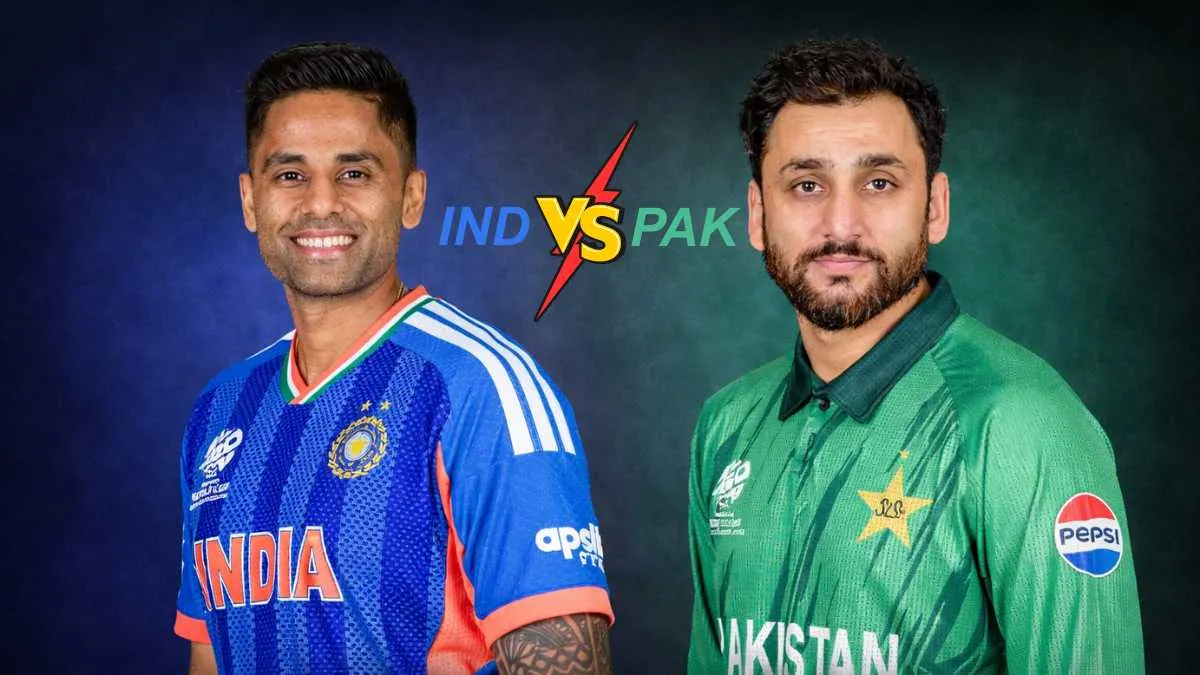

The India-Pakistan cricket rivalry is one of the most closely followed contests in international cricket, and its latest chapter comes in a particularly important setting. On October 3, 2026, India and Pakistan are scheduled to meet in the men’s cricket gold-medal match at the Asian Games in Japan. The final is being played at Korogi Sports Park in Nisshin, with the match scheduled to begin at 10:00 AM Indian Standard Time.
For fans searching for IND vs PAK live information, this match carries significance beyond an ordinary bilateral fixture. It is a final, it involves a gold medal, and it brings together two teams that reached the title match through contrasting semifinal victories. India defeated Sri Lanka by 124 runs, while Pakistan defeated Bangladesh by six wickets to book their respective places in the final.
The timing also makes the contest particularly convenient for viewers in India. With the first ball scheduled for 10:00 AM IST, fans can follow the entire match during the daytime rather than staying up late for an overseas fixture. The tournament setting adds another dimension because the players are representing their countries at a major multi-sport event, with a gold medal at stake.
IND vs PAK Live: Match Details at a Glance
The Asian Games final is a men’s T20 International, meaning the shorter format places considerable importance on quick starts, effective death bowling and the ability to adapt within a limited number of overs. The match is taking place in Nisshin, Japan, as part of the final day of the Aichi-Nagoya Asian Games.
| Match Detail | Information |
|---|---|
| Match | Pakistan vs India |
| Competition | Asian Games 2026 Men’s T20I |
| Stage | Gold Medal Final |
| Date | October 3, 2026 |
| Start Time | 10:00 AM IST |
| Venue | Korogi Sports Park, Nisshin, Japan |
| Format | T20 |
| Status | Gold-medal match |
The published schedules from cricket coverage services list the final for 10:00 AM IST on October 3. Reports ahead of the contest also identify the fixture as the first India-Pakistan cricket meeting in the Asian Games competition, giving the match additional tournament history.
How India Reached the Asian Games Final
India entered the gold-medal match after a commanding semifinal against Sri Lanka. The Indian side posted 169/7 from its 20 overs and then dismissed Sri Lanka for just 45 in 9.5 overs, producing a 124-run victory. That result gave India considerable momentum going into the final and demonstrated the team’s ability to contribute in both batting and bowling phases.
The semifinal also gave Indian supporters several reasons to pay attention to the final. A strong batting performance established a substantial total, while the bowlers and fielders completed the job quickly. In a T20 final, however, previous margins do not automatically carry over. The conditions, pitch, powerplay and individual matchups can all influence the outcome, so the semifinal result provides context rather than a guarantee of what happens next.
India’s route to the final included an abandoned quarterfinal against Afghanistan before the team advanced and eventually defeated Sri Lanka in the semifinal. The tournament therefore represents a compact competition in which each match can have a major effect on medal ambitions.
Pakistan’s Road to the Gold Medal Match
Pakistan secured its place in the final by defeating Bangladesh in the other semifinal. Bangladesh scored 111/7 in a shortened 13-over contest, after which Pakistan reached 112/4 in 11.3 overs to win by six wickets. The victory showed Pakistan’s ability to chase a target efficiently under compressed match conditions.
The difference between the two semifinal victories is worth noting because the matches were not identical situations. India had a full 20-over batting opportunity against Sri Lanka, while Pakistan’s semifinal was reduced to 13 overs per side. As a result, the statistics from those games should be considered within their respective contexts rather than treated as direct measurements of the teams’ relative strength.
Pakistan’s successful chase nevertheless provided useful preparation for another high-pressure T20 situation. In a final, the ability to manage the powerplay, preserve wickets and accelerate at the right moment can become particularly important. Pakistan’s semifinal performance showed that its batting unit was comfortable operating with a demanding run rate in a shortened game.
Why This Final Has Extra Significance
An India-Pakistan match naturally attracts substantial attention, but the Asian Games setting gives this particular encounter a separate sporting importance. Instead of being a league fixture or an isolated bilateral game, it is a medal match. The winner will take the men’s cricket gold medal, while the losing finalist will receive silver.

The competition also provides an opportunity to see how players perform in a multi-sport environment. Cricket is sharing the Asian Games spotlight with athletics, wrestling, hockey, archery and numerous other disciplines. On October 3, India is also involved in other major medal events, including the men’s hockey final against Malaysia.
For viewers following IND vs PAK live, this broader context helps explain why the fixture is receiving considerable attention. It is one of the headline events on the final day of the Asian Games, and the gold-medal setting means every over can have a direct effect on the final medal standings.
Key Players and Matchups to Watch
One of the major talking points before the final has been India’s young batter Vaibhav Sooryavanshi. Reports ahead of the match have highlighted his recent performances and the tactical challenge posed by Pakistan’s spin options. The matchup is particularly interesting because T20 cricket can turn on a single over, especially when an aggressive batter faces a bowler capable of changing pace and exploiting the surface.
India also has experienced international names available in the squad, with Jasprit Bumrah among the players attracting attention before the gold-medal contest. His ability to operate during difficult phases of an innings gives India an important bowling option, particularly when Pakistan’s batters attempt to accelerate during the middle and final overs.
Several factors could shape the contest:
- Powerplay batting and the number of wickets lost early.
- How effectively each side handles spin in the middle overs.
- Death-over bowling and boundary prevention.
- Fielding quality during high-pressure moments.
These areas are especially important in T20 cricket because teams have fewer deliveries to recover from mistakes. A poor over can change the required run rate quickly, while a successful over can completely alter the pressure on the opposition.
India’s Batting Approach
India’s semifinal performance demonstrated that the batting order can build a significant total when it gets a strong platform. The challenge against Pakistan will be to balance aggression with wicket preservation. In a T20 final, attempting to dominate every delivery can create unnecessary risks, while excessive caution can leave a team short of the score it needs.
The opening partnership could therefore have an important influence on the shape of the innings. If India starts quickly without losing wickets, the middle order can attack with greater freedom. Conversely, early dismissals could force the middle order to rebuild before launching a late assault. This is one reason live viewers often focus closely on the first six overs.
The conditions at the Japanese venue can also influence batting decisions. Players must assess pace, bounce and grip rather than relying entirely on previous performances. A total that appears modest in one set of conditions can become competitive in another, particularly if the bowlers can exploit the surface.
Pakistan’s Batting Strategy
Pakistan’s semifinal chase showed that its batting lineup can move quickly when a target is clearly defined. Against India, however, the pressure is likely to be different because the opposition has a strong bowling attack and the match is a gold-medal final.
The Pakistani top order will need to judge the conditions carefully. T20 batting is not simply about hitting boundaries; rotating the strike, targeting specific bowlers and maintaining wickets can be equally valuable. If Pakistan enters the final overs with wickets in hand, the batting side can potentially attack more aggressively.
At the same time, India’s bowlers will attempt to create pressure through changes of pace, variations and disciplined field placements. The contest between Pakistan’s batters and India’s bowling unit could therefore become one of the central tactical battles of the match.
What Makes T20 Cricket So Unpredictable
The attraction of IND vs PAK live coverage is partly connected to the unpredictable nature of the T20 format. A Test match provides hundreds of deliveries over several days, while an ODI allows 50 overs per side. T20 cricket provides only 120 legal deliveries for each team, which makes every phase more concentrated.
A team can dominate for much of an innings and still lose momentum after two or three expensive overs. Similarly, a batter can struggle initially and then change the game with a rapid sequence of boundaries. Bowlers face comparable pressure because even a small tactical mistake can disappear over the boundary.
This makes live viewing particularly valuable. Scorecards provide numbers, but they do not always capture the changing pressure of a match. A team chasing a challenging total may appear comfortable based on the required run rate, only for two quick wickets to transform the situation. The opposite can also happen when a lower-order batter produces an unexpected burst of runs.
How Fans Can Follow the Match
The final has been scheduled for 10:00 AM IST, making it accessible to Indian viewers during the morning. Reports before the match stated that Sony Sports Network and Sony LIV would provide coverage in India.
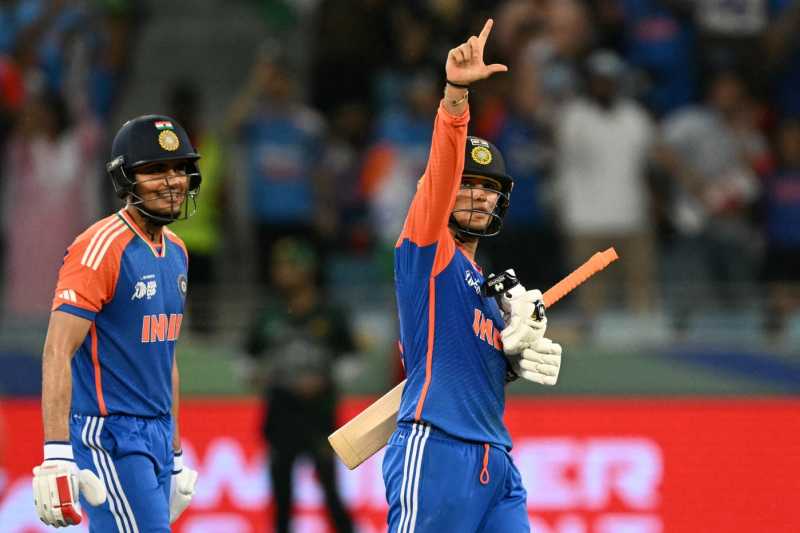
Fans following the contest should distinguish between live commentary, score updates and official match results. During a high-profile game, social media can produce rapidly changing information, but scorecards and established sports coverage provide a more reliable way to confirm statistics such as wickets, overs, strike rates and final scores.
For those unable to watch every delivery, following the score progression can still provide a useful picture of the match. Powerplay totals, wickets at the halfway stage and the final five-over scoring rate are particularly useful indicators of how an innings is developing.
The Bigger Picture for Indian Cricket
The Asian Games final comes during a busy period for Indian cricket. India is also scheduled to play the West Indies in an ODI in New Chandigarh later on October 3, followed by a five-match T20I series against the West Indies beginning October 6.
Looking further ahead, India and Pakistan are also scheduled to meet in the group stage of the 2027 ODI World Cup. The recently announced World Cup schedule places that match on October 10, 2027, at The Wanderers in Johannesburg.
That future fixture illustrates how the India-Pakistan rivalry will continue to feature prominently in major international tournaments. However, the Asian Games final has its own identity because the immediate prize is a gold medal and the match forms part of the closing stage of the 2026 Asian Games.
What Viewers Should Watch During the Final
For anyone following IND vs PAK live, the most useful approach is to watch the match in phases rather than focusing only on the final score. The opening six overs can reveal which team has adapted better to the conditions. The middle overs show how effectively batters rotate the strike and how bowlers control scoring opportunities. The final five overs often determine whether an innings finishes above or below its expected total.
Fielding can also be decisive. A dropped catch, missed run-out or misfield can produce a swing of several runs in a short-format game. Likewise, accurate boundary-line fielding becomes increasingly important when batters begin targeting specific areas.
Captaincy decisions deserve attention as well. Bowling changes, field placements and the timing of key bowlers can influence the flow of the innings. In a close final, tactical decisions made over just a few deliveries may have consequences that become obvious only later.
Conclusion
The India-Pakistan Asian Games cricket final is a major sporting event on October 3, 2026, bringing together two traditional rivals in a gold-medal contest. India reached the final after a comprehensive semifinal win over Sri Lanka, while Pakistan advanced by defeating Bangladesh in its semifinal. The final is scheduled for 10:00 AM IST at Korogi Sports Park in Nisshin, Japan. For viewers searching for IND vs PAK live updates, the most important details are the match’s final status, score, wickets, overs and major turning points. Beyond the rivalry itself, the contest provides an opportunity to see how both teams handle the pressure of a championship match in the T20 format.