
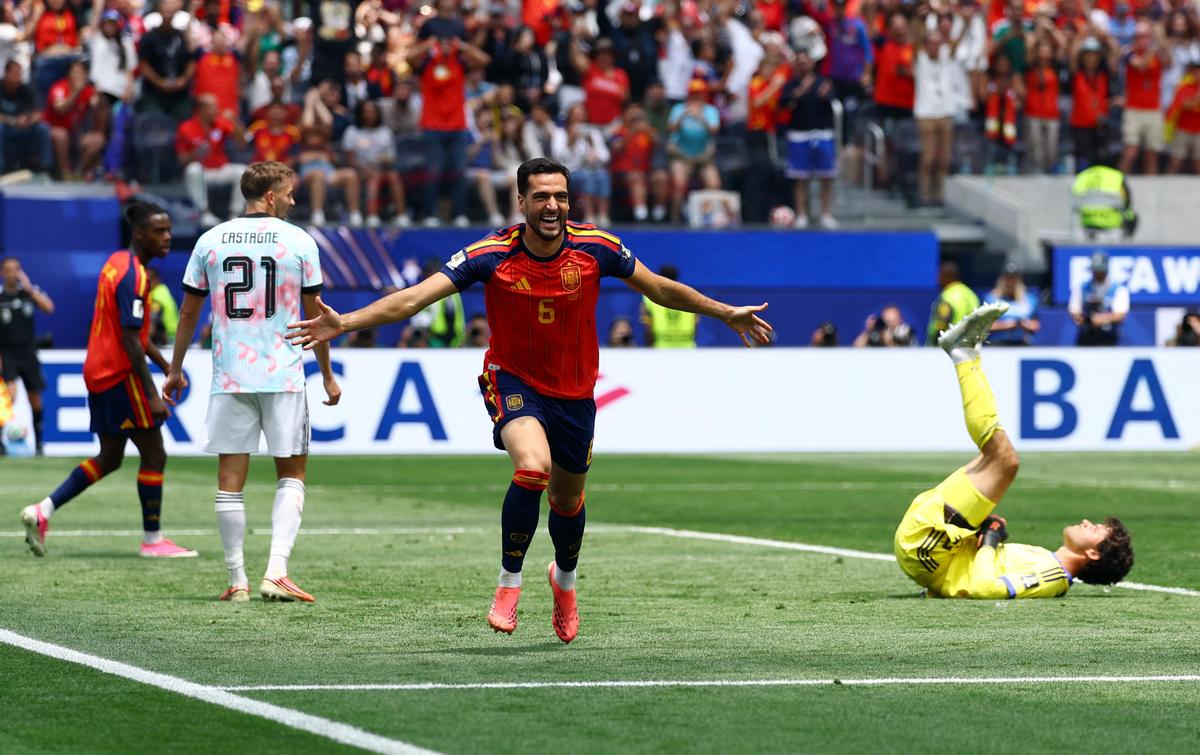

The FIFA World Cup 2026 created a new chapter in international football by expanding the tournament to 48 teams and 104 matches. Hosted across Canada, Mexico, and the United States, the competition brought together more nations, more fixtures, and a new knockout-stage structure. The tournament ran from June 11 to July 19, 2026, with matches played across 16 host cities. FIFA’s official schedule confirms that the competition featured 72 group-stage matches followed by 32 knockout games.
For supporters, the expanded tournament meant that there were more opportunities to watch different footballing styles and follow teams that had previously found it difficult to reach the final competition. The larger field also changed the route to the trophy. Instead of moving directly from the traditional group stage into a Round of 16, the 2026 competition introduced a Round of 32. That additional stage meant that a team reaching the final had to play eight matches rather than seven.
The completed tournament also gave fans a memorable conclusion. Spain defeated Argentina 1–0 after extra time in the final at New York New Jersey Stadium on July 19, while England defeated France 6–4 in the bronze final. FIFA’s final tournament standings placed Spain first, Argentina second, and England third.
What Made FIFA World Cup Games 2026 Different?
The biggest change was the number of participating nations. Previous editions had featured 32 teams, but the 2026 tournament increased that number to 48. FIFA organized the teams into 12 groups of four, with every team playing three group matches. The top two teams from every group and the eight best third-place teams advanced to the Round of 32. This structure created 72 group-stage fixtures before the knockout competition began.
The expanded format affected the rhythm of the entire competition. A team could no longer rely on simply finishing among the top two in a smaller group because third-place teams also had a route forward. At the same time, the additional knockout round created another opportunity for surprises. Once the Round of 32 began, every match became a direct elimination contest, meaning a single defeat ended a team’s campaign.
The tournament also represented a major geographical expansion. Matches were staged in 16 cities across three countries, creating a competition that stretched across North America. Canada hosted games in Toronto and Vancouver, Mexico hosted matches in Guadalajara, Mexico City, and Monterrey, while the United States hosted the remaining venues.
FIFA World Cup Games Format Explained
Understanding the format is essential for following the results and tournament progression. The group stage contained 12 groups with four teams each. Every nation played three matches, giving teams an opportunity to recover from an early result. The top two teams in every group automatically advanced, while the eight strongest third-place teams also earned places in the knockout bracket.
That structure produced a 32-team knockout field. From there, the competition moved through the Round of 32, Round of 16, quarter-finals, semi-finals, bronze final, and final. The knockout games were particularly significant because there was no room for a poor result. Teams needed to win their individual matches to continue, with extra time and penalty shootouts available where required under the competition rules.
| Tournament stage | Number of matches | Purpose |
|---|---|---|
| Group stage | 72 | Determine the 32 knockout qualifiers |
| Round of 32 | 16 | Reduce the field to 16 teams |
| Round of 16 | 8 | Determine the quarter-finalists |
| Quarter-finals | 4 | Determine the semi-finalists |
| Semi-finals | 2 | Determine the finalists |
| Bronze final | 1 | Determine third place |
| Final | 1 | Determine the world champion |
Together, those stages accounted for all 104 matches. FIFA described the tournament as the biggest edition in World Cup history, with the schedule designed across 16 venues and three host countries.
Group-Stage Matches and Early Tournament Drama
The opening FIFA World Cup games began on June 11, when hosts Mexico faced South Africa at Mexico City Stadium. Mexico won the opening match 2–0, while Korea Republic defeated Czechia 2–1 in the other Group A fixture that day. The opening schedule immediately demonstrated the scale of the competition, with matches taking place across multiple cities and time zones.
Several group-stage fixtures attracted particular attention because of the teams involved and the historical significance of certain matchups. Brazil drew 1–1 with Morocco, while Germany defeated Curaçao 7–1. The Netherlands and Japan played out a 2–2 draw, and Sweden defeated Tunisia 5–1. These results showed how unpredictable a 48-team competition could become, particularly as teams adjusted to different opponents and tournament conditions.
The group stage also introduced supporters to nations making their World Cup debuts or returning to the competition after long absences. Curaçao, for example, made its first appearance at the men’s FIFA World Cup and faced Germany in Houston. FIFA had previously highlighted Curaçao as the smallest country ever to feature at a men’s World Cup.
How the Knockout FIFA World Cup Games Worked
The Round of 32 was one of the defining additions to the 2026 competition. With 32 teams qualifying from the group stage, the tournament moved into a traditional single-elimination structure. Teams that had survived the group phase now faced an entirely different challenge: one match could determine whether their campaign continued or ended.
The Round of 16 followed, reducing the field from 16 teams to eight. The quarter-finals then produced the final four, before the semi-finals determined which nations would compete for the championship. FIFA’s official knockout record shows that France defeated Morocco 2–0 in one quarter-final, Spain beat Belgium 2–1, England defeated Norway 2–1 after extra time, and Argentina beat Switzerland 3–1.
Several knockout fixtures demonstrated how quickly momentum could change. Spain defeated Portugal 1–0 in the Round of 16, while Argentina overcame Egypt 3–2. Switzerland and Colombia required a penalty shootout after a 0–0 draw, with Switzerland advancing 4–3 on penalties. Such matches illustrated why knockout football is often defined by individual moments rather than long-term group-stage consistency.
Key FIFA World Cup Games From the Final Stages
The semi-finals brought together four teams competing for a place in the championship match. Spain defeated France 2–0 in Dallas on July 14, while Argentina defeated England 2–1 in Atlanta the following day. Those victories established Spain and Argentina as the finalists.
The bronze final between France and England provided another high-scoring encounter. England won 6–4 in Miami on July 18, securing third place. FIFA’s final standings recorded England’s third-place finish as its best World Cup result since winning the competition in 1966.
The final took place on July 19 at New York New Jersey Stadium. Spain defeated Argentina 1–0 after extra time, completing a second World Cup triumph for Spain. FIFA’s tournament record notes that Spain conceded only one goal throughout its route to the title and defeated Cabo Verde, Saudi Arabia, Uruguay, Austria, Portugal, Belgium, France, and Argentina across its eight matches.
The Importance of the Host Cities
Another distinctive feature of the FIFA World Cup games in 2026 was the scale of the host-city network. Sixteen cities across Canada, Mexico, and the United States staged matches, allowing the tournament to reach a broad range of football communities and audiences.
Mexico City had particular historical significance because its stadium hosted the opening match. Mexico became the first country to host the men’s FIFA World Cup three times, following its previous tournaments in 1970 and 1986.
The United States hosted the largest share of venues, including Atlanta, Boston, Dallas, Houston, Kansas City, Los Angeles, Miami, New York New Jersey, Philadelphia, San Francisco Bay Area, and Seattle. Canada hosted matches in Toronto and Vancouver, while Guadalajara, Mexico City, and Monterrey represented Mexico.
This geographic spread influenced the tournament experience for both teams and supporters. FIFA explained that the schedule was developed with factors such as travel, rest periods, venue conditions, transportation, and different time zones in mind. The group stage alone was played across 16 venues and four time zones.
Why the 2026 Match Format Matters
The expanded competition changed the meaning of progression. With 48 teams participating, more nations had the opportunity to compete on football’s largest international stage. At the same time, the additional matches created a longer tournament journey for teams that reached the final.

Under the previous 32-team structure, reaching the final required seven matches. In 2026, finalists had to complete eight matches because of the newly introduced Round of 32. That meant squad depth, recovery, tactical flexibility, and consistency could become increasingly important as teams progressed through the competition. FIFA confirmed that the new structure was selected after considering factors including team and fan experience, player welfare, and sporting integrity.
The format also created additional opportunities for football fans to discover teams from different confederations. More participating nations meant more international matchups and a broader representation of football cultures. For viewers, that expanded variety was one of the defining characteristics of the tournament.
What Fans Can Learn From FIFA World Cup Games
Looking back at the tournament provides several useful lessons about international football. Group-stage football rewards consistency because teams have multiple opportunities to collect points, while knockout football places greater emphasis on handling pressure in a single fixture. The 2026 tournament demonstrated both sides of that equation.
For fans reviewing the competition, several aspects are particularly useful to track:
- Group-stage points, goal difference, and qualification positions.
- Knockout results and extra-time or penalty-shootout outcomes.
- Stadium locations and the effect of travel between host cities.
- Individual and team performances throughout the eight-match championship route.
The tournament also demonstrates why World Cup statistics should always be considered in context. A team’s number of victories, goals, clean sheets, or successful knockout rounds tells part of the story, but the opponents, stage of the competition, match circumstances, and route through the bracket can provide additional meaning.
How the 2026 Tournament Will Be Remembered
The 2026 competition will be remembered for its expanded scale as much as for its football. Forty-eight teams participated, 104 matches were played, and the tournament crossed three countries and 16 host cities. It was the first men’s World Cup to use the 48-team format, making its structure a significant milestone in the history of the competition.
The final also gave the tournament a clear historical conclusion. Spain’s 1–0 extra-time victory over Argentina delivered its second World Cup title, while Argentina finished as runners-up after entering the tournament as defending champions. England completed the podium after its 6–4 bronze-final victory over France.
Beyond the final result, the tournament offered a much broader collection of stories. New teams experienced World Cup football, established nations faced unfamiliar opponents, and supporters followed matches across an unusually large geographical area. The expanded competition therefore became not just a longer tournament, but a different kind of World Cup experience.
Conclusion
The FIFA World Cup games of 2026 represented a major evolution in the history of the world’s most prominent international football tournament. The move to 48 teams and 104 matches created a competition with more group-stage fixtures, an additional Round of 32, and a longer route to the championship. With matches spread across Canada, Mexico, and the United States, the tournament also introduced an unprecedented three-country hosting model. The completed competition ultimately ended with Spain defeating Argentina 1–0 after extra time in the final, while England took third place after its victory over France. Yet the significance of the 2026 tournament extends beyond those final results. Its expanded format, broader participation, multiple host cities, and 104-match schedule established a new reference point for understanding how future World Cups can be structured. For football fans, the tournament provided an extensive collection of matches, stories, records, and moments that will remain part of World Cup history.