
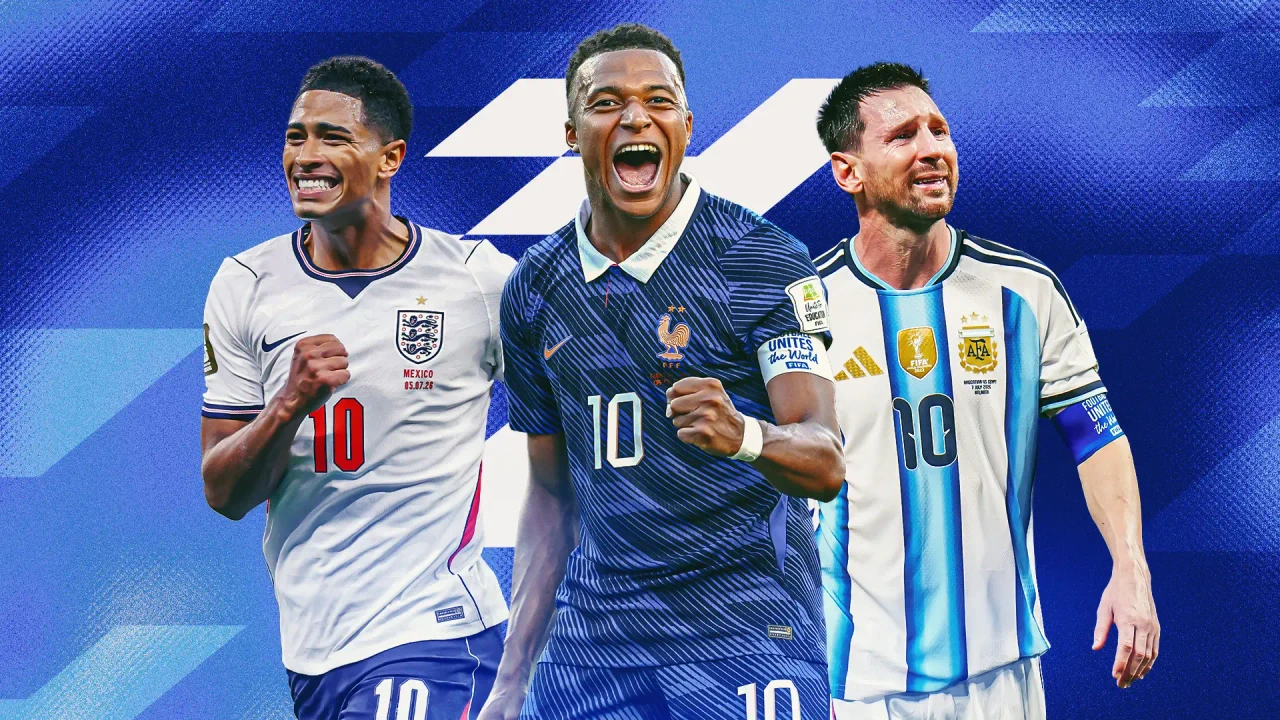

The FIFA World Cup 2026 became a landmark edition of international football, bringing together an expanded field of 48 national teams across Canada, Mexico and the United States. The tournament ran from 11 June to 19 July 2026 and featured 104 matches across 16 host cities. It was the first World Cup to be staged jointly across three countries and the first to use the expanded 48-team format.
The tournament also delivered a memorable conclusion. Spain defeated Argentina 1–0 after extra time in the final at New York New Jersey Stadium on 19 July, securing Spain’s second men’s World Cup title. Ferran Torres scored the decisive goal in the 106th minute, bringing an end to a competition that introduced a new structure while producing several historic moments.
For football supporters, the 2026 tournament represented more than an increase in participating nations and matches. It changed the rhythm of the competition, expanded the geographical footprint of the event and created opportunities for more countries to experience the World Cup stage. With 48 teams competing instead of the previous 32, the tournament offered a broader representation of world football while also requiring teams that reached the final to play an additional knockout match.
FIFA World Cup 2026: A New Era for the Tournament
The most important structural change was the expansion from 32 teams to 48. FIFA divided the participating nations into 12 groups of four, with every team playing three group-stage matches. The top two teams from each group advanced, along with the eight best third-placed teams, creating a new Round of 32 before the traditional knockout rounds.
This adjustment significantly increased the number of matches. The tournament featured 72 group-stage games followed by the Round of 32, Round of 16, quarter-finals, semi-finals, third-place match and final. In total, 104 matches were played. Teams reaching the final therefore had to navigate eight matches rather than the seven required under the previous 32-team structure.
The expanded format also changed the importance of group-stage performances. While finishing among the top two remained the clearest route into the knockout phase, the introduction of eight places for the best third-placed teams meant that teams could remain in contention even after an uneven start. That created additional tactical possibilities and gave more nations a realistic opportunity to continue their tournament campaigns.
How the 48-Team Format Worked
The group stage provided each nation with three matches, making every result important. Teams earned points through wins and draws, while goal difference and other competition criteria helped separate teams where necessary. Once the group phase ended, 32 nations moved into the knockout stage.
The knockout phase introduced a straightforward elimination structure. From the Round of 32 onward, the winner of each match advanced while the losing team was eliminated. This made the later stages particularly demanding because there was no opportunity to recover from a single poor performance.
Three Host Countries and 16 Host Cities
Another defining feature of the FIFA World Cup 2026 was its geographic scale. Canada, Mexico and the United States jointly hosted the tournament, with matches spread across 16 host cities. Canada hosted matches in Toronto and Vancouver, Mexico hosted games in Guadalajara, Mexico City and Monterrey, while the United States hosted matches across 11 locations.
The arrangement created a tournament unlike earlier editions, where the majority of matches were concentrated within one country. Supporters and teams had to navigate a vast North American geography, while tournament organizers coordinated transportation, accommodation, training facilities, security, broadcasting and stadium operations across three national systems.
| Country | Host cities | Tournament role |
|---|---|---|
| Canada | Toronto, Vancouver | Group-stage and knockout matches |
| Mexico | Guadalajara, Mexico City, Monterrey | Opening match, group and knockout matches |
| United States | 11 host cities | Group, knockout and final-stage matches |
The scale was also reflected in team preparation. FIFA reported that all 48 teams selected Team Base Camps, with 39 teams based in the United States, seven in Mexico and two in Canada. These facilities provided training and recovery locations throughout the competition and extended the tournament’s impact beyond the cities that directly hosted matches.
Mexico Hosted the Opening Match
Mexico played a central role in the opening of the tournament. The first match took place on 11 June at Mexico City Stadium, where Mexico defeated South Africa 2–0. A second opening-day fixture saw Korea Republic defeat Czechia 2–1 in Guadalajara.
Hosting the opening match gave Mexico an important place in World Cup history because the country became part of the first tournament jointly staged across three nations. Mexico City also provided one of the competition’s most recognizable settings, linking the 2026 tournament with Mexico’s long history of hosting major international football events.
The distribution of games across Mexico, Canada and the United States also meant supporters could experience distinctly different football environments. From Mexico’s passionate football culture to Canada’s growing international presence and the enormous stadium infrastructure available in the United States, the tournament offered a wide variety of matchday settings.
The Tournament Produced 104 Matches
The sheer number of matches made the FIFA World Cup 2026 the largest edition of the men’s tournament in terms of games played. FIFA confirmed that 104 matches were staged across the 16 host cities, with the competition running for 34 days from the opening match through the final.
For players and coaching staffs, the expanded competition created another layer of physical and tactical demands. Reaching the final required eight matches, meaning squad management became especially important during the later stages. Coaches had to consider rotation, recovery periods, injuries and tactical adjustments while dealing with the pressure of elimination football.
For supporters, however, the larger schedule meant more opportunities to watch different footballing styles. More participating nations also meant more matchups between teams that had rarely, if ever, met at a World Cup finals tournament. This broadened the competitive landscape and gave emerging football nations greater exposure on the global stage.
Key Moments From the Knockout Stage
The knockout rounds provided the decisive chapter of the tournament. After the expanded group stage, 32 teams entered the elimination phase, creating an additional round before the traditional Round of 16. Every match carried immediate consequences because a defeat meant the end of a team’s World Cup campaign.
The semi-finals eventually produced Spain against France and England against Argentina. Spain defeated France 2–0, while Argentina defeated England 2–1. These results established the final matchup between Spain and Argentina and set up a meeting between two teams with significant World Cup histories.
The third-place match also produced a remarkable scoreline. England defeated France 6–4 in Miami, with Bukayo Saka scoring a hat-trick. The match became one of the tournament’s most memorable high-scoring encounters and provided an energetic conclusion for both teams after their semi-final defeats.
Spain Won the 2026 World Cup
The final of the FIFA World Cup 2026 took place on 19 July at New York New Jersey Stadium. Spain and Argentina remained level at 0–0 after 90 minutes, forcing the championship match into extra time. Ferran Torres eventually broke the deadlock in the 106th minute, giving Spain a 1–0 victory and its second men’s World Cup championship.
Spain’s victory added another chapter to its international football history. The triumph followed the nation’s previous World Cup success in 2010 and established Spain as the first nation to simultaneously hold both the men’s FIFA World Cup and FIFA Women’s World Cup trophies, according to FIFA.
The final also completed a tournament in which Spain had to negotiate the new eight-match route to the championship. Winning the competition required consistency across the group stage and multiple knockout rounds, making the title a reflection of performance throughout the expanded tournament rather than a short seven-match campaign.
Why the 2026 Tournament Was Historically Significant
Several features made the tournament different from previous World Cups. The combination of a 48-team field, three host countries, 16 host cities and 104 matches represented a substantial expansion of the traditional tournament model.
Some of the most important changes included:
- 48 national teams competing instead of 32.
- 104 matches played during the tournament.
- 12 groups of four teams in the opening stage.
- A new Round of 32 before the Round of 16.
The event’s operational scale was equally significant. FIFA later reported that more than 6.8 million fans attended matches across the tournament, while 1,248 players represented the 48 participating nations. More than 43,000 volunteers and 73,700 accredited security personnel were involved in tournament operations.
These figures demonstrate why organizing the competition required cooperation across multiple countries and a huge network of venues, training sites, transportation systems and support facilities. The World Cup was not confined to the stadiums themselves; it involved hundreds of official sites and communities throughout North America.
The Impact on North American Football
The tournament also represented an important moment for football in North America. Hosting the competition across Canada, Mexico and the United States placed the sport at the center of attention in a region where football has continued to grow alongside established sporting traditions.

For Canada, the tournament provided an opportunity to showcase its football infrastructure and national team on home soil. Mexico brought decades of World Cup experience and one of the world’s most established football cultures, while the United States supplied the largest share of host cities and team base locations.
The broader geographical structure meant that communities outside the 16 match-hosting cities could also participate. FIFA identified 25 additional communities that hosted national team training sites, allowing the tournament’s presence to extend beyond the stadium locations.
What the Expanded Tournament Means for Future World Cups
The FIFA World Cup 2026 created a new reference point for how the competition can be organized with a larger field. The expanded format gave more nations access to the world’s biggest football tournament while substantially increasing the number of matches.
At the same time, the format demonstrated the logistical challenges that accompany a larger World Cup. More teams mean more training facilities, accommodation requirements, travel arrangements, match officials, media operations and security planning. A tournament spread across three countries also requires careful coordination to ensure that teams and supporters can move efficiently between locations.
The 2026 edition therefore offered a practical example of the opportunities and complexities associated with an expanded World Cup. Its results, attendance and organizational scale will provide useful reference points when future editions are planned and evaluated.
Conclusion
The FIFA World Cup 2026 will be remembered as a transformational edition of international football. It introduced the 48-team format, expanded the tournament to 104 matches and brought the competition to three host countries and 16 cities. The wider field gave more nations the opportunity to participate, while the new Round of 32 added another stage of knockout competition.The tournament ultimately ended with Spain defeating Argentina 1–0 after extra time in New York New Jersey, with Ferran Torres scoring the championship-winning goal. Beyond the final result, the event demonstrated how the world’s biggest football tournament could operate on an unprecedented continental scale.