
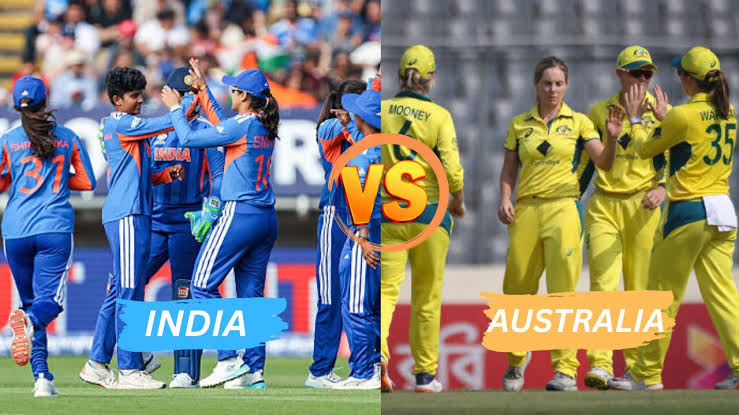

The australia vs india women cricket rivalry has become one of the most closely followed contests in international women’s cricket. Both teams regularly compete at the highest level across Tests, One Day Internationals and T20 Internationals, creating matches that combine tactical planning, individual brilliance and intense competition. Their recent meetings have provided plenty of drama, from closely fought T20 games to dominant performances in longer formats.
The rivalry has also developed because the two sides bring different cricketing traditions and strengths to the field. Australia have built a reputation around depth, athleticism and experience across major tournaments, while India have continued to develop a powerful batting group and a deeper pool of international players. Their encounters are therefore more than ordinary bilateral matches; they frequently become important tests of how two leading women’s cricket systems perform under pressure.
The 2026 season has already added several significant chapters to this rivalry. India toured Australia in February and March for T20Is, ODIs and a Test, while the teams later met at Lord’s during the ICC Women’s T20 World Cup. Australia won the T20 World Cup group-stage encounter by six wickets after chasing India’s 170/4 with 172/4 in 19 overs.
Australia vs India Women Rivalry in Modern Cricket
The modern australia vs india women contest is shaped by the growth of women’s cricket as a global professional sport. Matches between these teams now attract substantial attention because both countries have established domestic structures, experienced international players and strong tournament ambitions.
Australia have traditionally entered major tournaments with a deep squad capable of adapting to different match situations. Their players are accustomed to playing high-pressure cricket, while their domestic competition provides a broad pathway for emerging talent. India, meanwhile, have benefited from the rapid professionalisation of women’s cricket and the increasing opportunities available through domestic and international competitions.
One important feature of this rivalry is that the balance can change considerably depending on the format. A Test match demands patience, concentration and technical discipline, while an ODI requires teams to manage 50 overs and build innings strategically. T20 cricket places greater emphasis on rapid scoring, flexible bowling plans and fielding execution. As a result, a result in one format does not automatically explain what may happen in another.
Recent 2026 Series Between the Two Teams
The 2026 India tour of Australia was particularly important because it included all three major international formats. The tour began with a three-match T20I series in February, followed by three ODIs and a one-off Test in March. This gave both teams an opportunity to test their squads across very different conditions and match situations.
The T20I series demonstrated how quickly momentum can change between these sides. India won the opening T20I by 21 runs under the DLS method, Australia responded by winning the second match by 19 runs, and India took the third game by 17 runs. The series therefore ended with India taking the T20I contest 2–1.
The ODI series produced a different pattern. Australia won all three matches, including victories by six wickets in Brisbane, five wickets in Hobart and 185 runs in the third ODI. The final match was particularly one-sided, with Australia making 409/7 before India were dismissed for 224.
The one-off Test in Perth then provided another contrasting contest. Australia scored 323 in their first innings, India replied with 198, and Australia completed a 10-wicket victory after India were dismissed for 149 in the second innings.
2026 Australia Tour Results at a Glance
| Format | Result | Key Match Detail |
|---|---|---|
| T20I Series | India won 2–1 | India won the first and third matches |
| ODI Series | Australia won 3–0 | Australia won all three ODIs |
| One-off Test | Australia won | Australia won by 10 wickets |
| T20 World Cup | Australia won | Australia won by 6 wickets |
These results illustrate why head-to-head comparisons between the teams need context. India demonstrated strong competitiveness in the shortest format during the February T20I series, while Australia controlled the subsequent ODI series and Test. The same teams can therefore produce very different outcomes when conditions, match length and tactical requirements change.
The 2026 T20 World Cup Meeting
One of the biggest recent chapters in the australia vs india women rivalry came at the ICC Women’s T20 World Cup on June 28, 2026. The match at Lord’s was crucial because the result affected the qualification picture in Group A. Australia entered the game unbeaten and ultimately maintained that record by defeating India by six wickets.
India batted first and reached 170/4 from their 20 overs. Harmanpreet Kaur played an important late-innings role as India established a competitive total. Australia then produced a controlled chase, reaching 172/4 in 19 overs. Ellyse Perry and Ashleigh Gardner were among the key contributors during the Australian response.
The result was significant for both teams. Australia progressed to the semi-finals, while India’s campaign ended at the group stage. Australia subsequently defeated the West Indies in the semi-final and went on to win the tournament final against England by seven wickets at Lord’s on July 5.
Key Players Who Shape the Contest
The australia vs india women rivalry has featured many outstanding players, but the nature of the contest means that individual performances can have a major influence on the final result. India possess experienced batting leaders and technically accomplished players, while Australia have a combination of established stars and younger match-winners.

For India, players such as Smriti Mandhana and Harmanpreet Kaur can play important roles at the top and middle of the batting order. Mandhana has consistently been a major run-scoring presence in international cricket, while Harmanpreet brings extensive leadership and experience to high-pressure matches. The emergence of younger Indian players also adds depth to the squad.
Australia have an equally strong collection of experienced performers. Ellyse Perry remains one of the most recognised names in women’s cricket, while players such as Ashleigh Gardner provide powerful batting, useful bowling options and athletic fielding. Australia’s broader squad depth means that they can often replace experienced players without dramatically changing their tactical approach.
The most interesting battles are therefore not limited to one batter facing one bowler. They can involve opening partnerships, middle-order acceleration, spin against aggressive batting, death-over bowling and fielding under pressure. A team that wins several of these smaller battles can gain a significant advantage without dominating every phase of the game.
Why Conditions Matter So Much
Playing conditions are an important part of the australia vs india women matchup. Australia offers pitches and grounds that can vary considerably from one venue to another, while India presents its own combination of heat, humidity, spin-friendly surfaces and different outfield characteristics.
The 2026 tour illustrated how conditions can influence results. The ODI series in Australia produced high-scoring and decisive performances, while the Perth Test required a completely different approach. Players had to adapt their shot selection, bowling lengths and overall tempo depending on the format.
Travel can also influence preparation. International teams must manage long journeys, changing weather conditions and different time zones. Successful squads generally rely on detailed preparation rather than assuming that their usual methods will work everywhere.
T20 Cricket Adds Another Dimension
T20 cricket has made the rivalry particularly entertaining because there is very little room for slow starts. A few overs can completely alter the direction of a match. A batter scoring quickly in the powerplay can create pressure on the opposition, while a couple of wickets during the middle overs can force a team to change its plans.
India’s 2026 T20I series victory in Australia showed that they could compete effectively in the shortest format. Australia later demonstrated their ability to perform under tournament pressure by defeating India at the T20 World Cup and eventually winning the competition.
Several factors generally become decisive in these matches:
- Powerplay scoring and early wicket-taking.
- Middle-over strike rotation and spin management.
- Death-over batting and bowling execution.
- Fielding quality and catching under pressure.
Because T20 matches contain fewer deliveries, one exceptional individual performance can change the entire contest. That makes tactical flexibility especially valuable.
ODI Cricket Tests Team Depth
ODI cricket provides a broader test of squad quality because teams must manage 50 overs with both bat and ball. Australia’s 3–0 ODI series victory over India in February and March 2026 demonstrated how important consistency can be across multiple matches.
In a long ODI, a team needs reliable opening partnerships, a strong middle order and enough bowling options to manage different stages of the innings. Players who can contribute in more than one discipline can become particularly valuable because they give captains additional tactical choices.
India’s 2025 ODI meetings with Australia also showed that the rivalry can move quickly between different results. During that series in India, Australia won two matches and India won one, demonstrating that home conditions and match circumstances can have a substantial influence.
The Importance of Young Players
The future of the rivalry will depend heavily on how both teams develop their next generation. Women’s cricket is becoming increasingly competitive, and younger players now receive more exposure to professional environments than previous generations.
For India, the continued expansion of domestic women’s cricket provides opportunities for talented players to transition into international cricket. Australia similarly benefits from a well-established domestic pathway that allows players to develop skills before becoming regular internationals.
Young players can also change the tactical identity of a team. An aggressive young batter may increase the scoring rate, while a developing bowler may offer a different angle or pace from more experienced teammates. The challenge for coaches is balancing new talent with the stability provided by senior players.
What Makes the Rivalry So Interesting
The attraction of the rivalry comes from the combination of history, competitive depth and different cricketing approaches. Australia have enjoyed major tournament success, while India have continued to build a stronger presence in international women’s cricket.
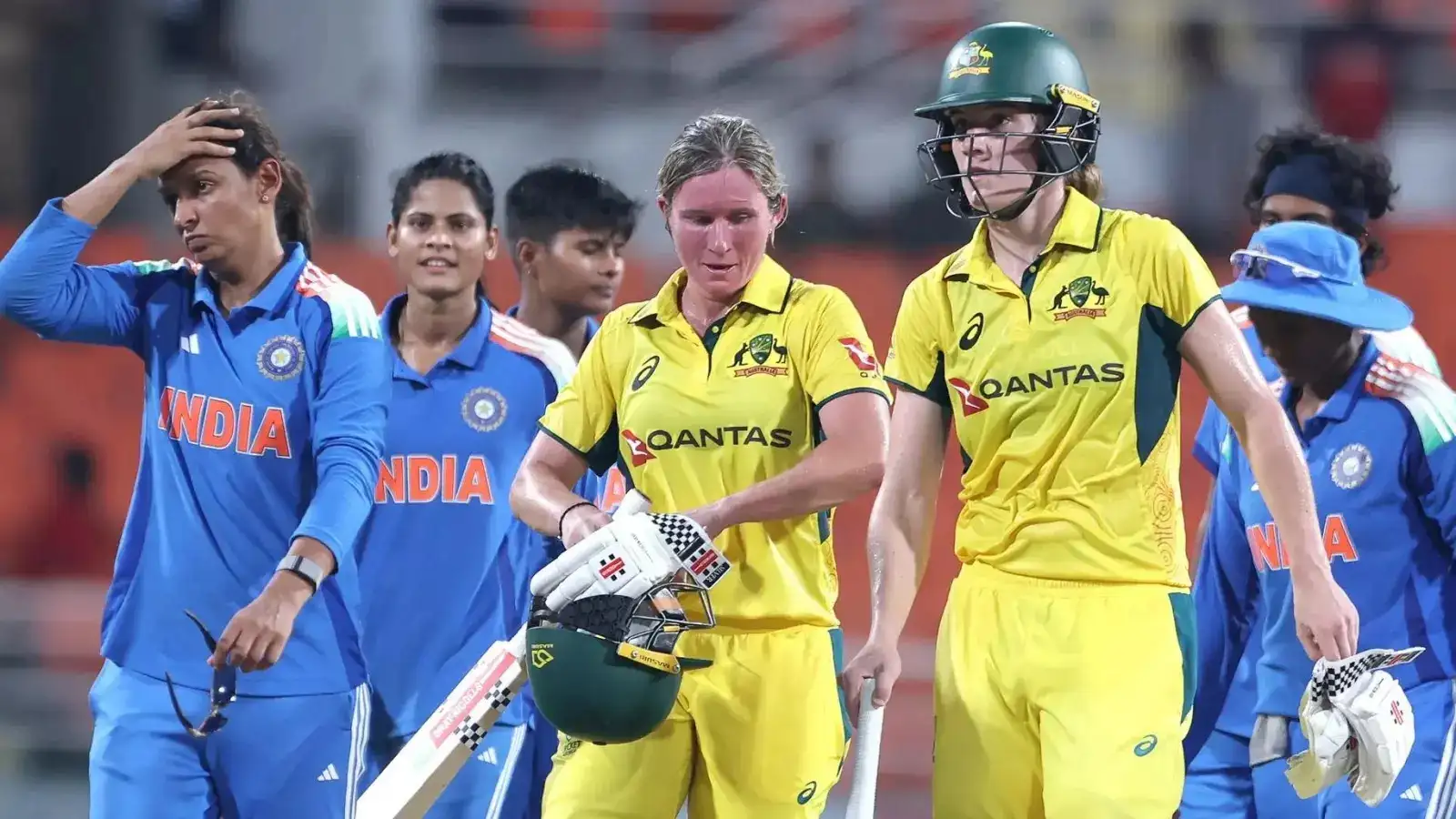
There is also a growing audience for women’s cricket across both countries. Fans now follow bilateral tours, global tournaments, domestic competitions and individual players throughout the year. As visibility increases, matches between two prominent teams naturally receive greater attention.
The rivalry also creates memorable narratives. A closely fought T20I, a high-scoring ODI, a long Test battle or a knockout match can all produce a completely different story. That variety keeps the contest relevant across the international calendar.
Looking Ahead
The future of the australia vs india women rivalry will be shaped by upcoming bilateral series, global tournaments and the continued development of players on both sides. The 2026 season has already demonstrated that results can vary dramatically by format: India won the T20I series in Australia, Australia swept the ODIs, Australia won the Test, and Australia later defeated India in the T20 World Cup.
The next major World Cup chapter is already on the horizon. The 2027 Women’s Cricket World Cup is scheduled to begin in October 2027, with India and Australia drawn in the same group. Their group-stage meeting is scheduled for October 7, adding another major fixture to an already established international rivalry.
That future encounter will be played under a different set of circumstances, with new form, selections and tournament pressure potentially influencing both teams. The exact makeup of the squads and the conditions on the day will ultimately determine how the match develops.
Conclusion
The australia vs india women rivalry represents the continuing growth and competitiveness of international women’s cricket. The two teams have repeatedly produced important matches across T20Is, ODIs, Tests and major global tournaments, with the balance often changing according to format and conditions. The events of 2026 provide a clear example. India won the T20I series in Australia, Australia responded with a 3–0 ODI sweep and a Test victory, and the teams met again at the T20 World Cup, where Australia won by six wickets before eventually claiming the tournament title.