
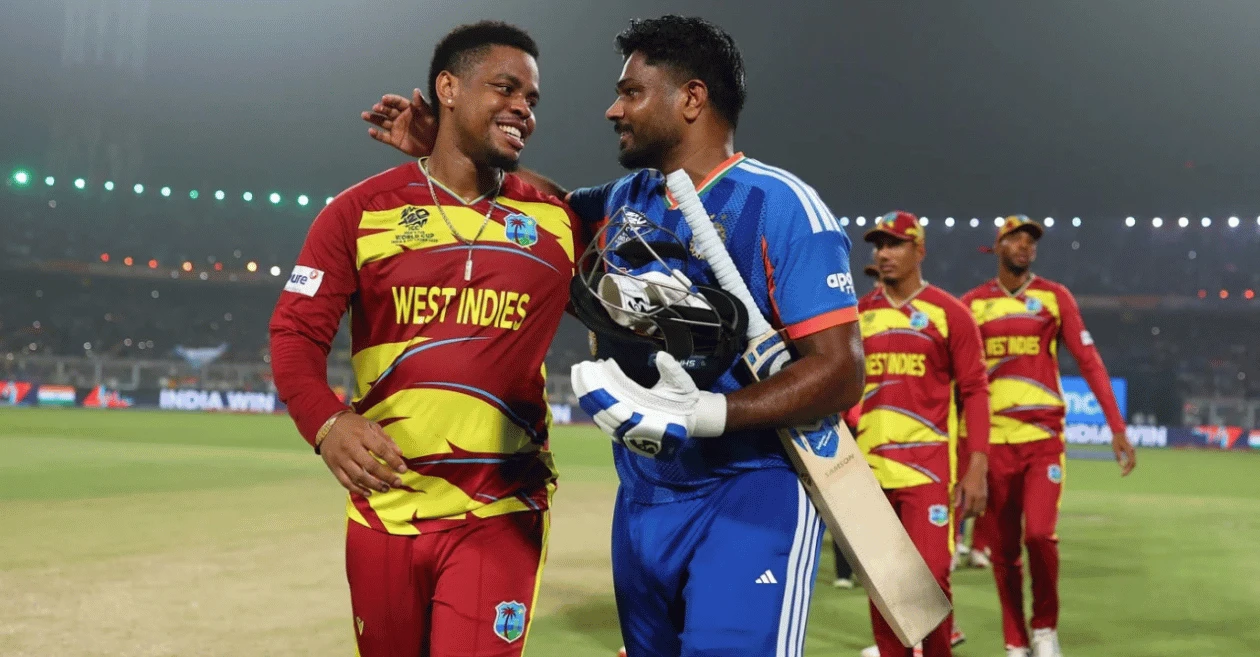

The IND vs WI T20 series has begun with India making a powerful statement in the opening match at Lucknow. The five-match contest is taking place across India, bringing together a confident Indian side and a West Indies team known for explosive batting, athletic fielding and unpredictable T20 cricket. With the first game already completed, attention now turns toward the remaining four matches and the tactical adjustments both teams will make as the series develops.
India entered the T20 leg after winning two of the three ODIs against West Indies, although the visitors ended that part of the tour with a convincing victory in the final ODI. The change from 50-over cricket to the faster T20 format has created a different challenge, particularly because both sides have players capable of changing a match within a few overs.
The opening T20I provided an excellent example of how quickly momentum can shift in the shortest international format. West Indies posted 171, but India chased the target in only 14.4 overs, winning by eight wickets. Captain Shreyas Iyer produced an unbeaten 102 from 43 deliveries, while the Indian bowling unit had already created significant pressure during the West Indies innings.
IND vs WI T20 Series: Current Scenario
The current IND vs WI T20 situation strongly favors India after the first match. India leads the five-game series 1–0, and the second T20I is scheduled for October 9 at the JSCA International Stadium in Ranchi. The remaining matches will then move to Indore, Hyderabad and Bengaluru, giving both teams several different conditions to adapt to.
The first match was particularly significant because India did not simply win; the team controlled large portions of the contest. West Indies struggled during the powerplay and lost three wickets while reaching only 44 runs. Shai Hope and Sherfane Rutherford then attempted to rebuild the innings, with both scoring half-centuries, but India continued taking wickets at important moments and eventually restricted West Indies to 171.
India’s response was even more decisive. Early wickets created a brief opportunity for West Indies, but Iyer took control of the chase and converted the target into a comfortable victory. His unbeaten century was the defining moment of the match, while Naman Dhir also attracted attention after taking three wickets on his T20I debut.
IND vs WI T20 Schedule and Venues
The five-match schedule gives the series a strong geographical spread. Instead of playing all games at one or two venues, the teams will travel through several Indian cities, meaning pitch behavior, boundaries, weather and local conditions could influence selection and strategy.
| Match | Date | Venue | Status |
|---|---|---|---|
| 1st T20I | October 6, 2026 | Lucknow | India won by 8 wickets |
| 2nd T20I | October 9, 2026 | Ranchi | Upcoming |
| 3rd T20I | October 11, 2026 | Indore | Upcoming |
| 4th T20I | October 14, 2026 | Hyderabad | Upcoming |
| 5th T20I | October 17, 2026 | Bengaluru | Upcoming |
All five matches are scheduled for evening starts in India, with the second game taking place in Ranchi on October 9. The series will conclude in Bengaluru on October 17.
The venue changes could become increasingly important as the series progresses. A surface that rewards stroke-making may favor India’s aggressive batting resources, while slower or more gripping conditions could give West Indies’ bowlers a better opportunity to create pressure. Teams also have to adjust their bowling plans depending on dew and the likely behavior of the ball during the second innings.
India’s Batting Strength
One of the biggest advantages for India is the depth available in the batting order. Modern T20 cricket demands players who can score rapidly without allowing the required run rate to become a major issue. India possesses several players capable of attacking during the powerplay as well as accelerating during the middle and final overs.
The first match demonstrated the importance of having players who can absorb early pressure and then completely change the pace of a chase. India lost wickets early, but Iyer’s innings ensured that the situation never became dangerous. His unbeaten 102 from 43 balls combined boundary hitting with excellent strike rotation and showed how one batter can dominate a T20 chase without needing a long period of rebuilding.
The presence of younger players also adds another dimension to India’s batting strategy. Players coming through domestic and franchise cricket are increasingly comfortable against high pace, spin variations and unusual field placements. That experience allows India to maintain an attacking approach even when the opposition manages to take early wickets.
Shreyas Iyer’s Leadership and Form
Shreyas Iyer is emerging as one of the central figures of this series. His leadership role becomes particularly important because T20 cricket requires rapid decisions regarding bowling changes, field placements and batting intent. His first-match century also provided India with exactly the kind of individual performance that can define a series.
Iyer’s unbeaten 102 was not merely a high-scoring innings; it was a demonstration of controlled aggression. He found boundaries regularly but also kept the innings moving between attacking shots. His performance came during a successful chase, which made it even more valuable because he remained at the crease until the target was completed.
His form will therefore be one of the major storylines in the remaining matches. West Indies cannot afford to allow him to settle because once an established batter becomes comfortable in T20 cricket, defensive field settings can become difficult to maintain. The visitors are likely to experiment with bowling lengths and match-ups to prevent another dominant innings.
West Indies’ Response After the Opening Defeat
For West Indies, the first match was disappointing but not without positive signs. The middle order demonstrated that the team could recover after losing wickets quickly. Shai Hope and Sherfane Rutherford both scored half-centuries, helping the visitors reach a competitive total after a difficult beginning.
The bigger concern will be the batting performance during the opening overs. Losing three wickets for 44 runs put West Indies under pressure before the innings had properly developed. Against a strong Indian bowling attack, early wickets can make it difficult to build the platform required for a 190-plus total.
West Indies also need a stronger bowling response. Defending 171 against an Indian batting lineup is challenging, but taking early wickets could have completely changed the contest. The visitors will need better execution with the new ball, smarter use of variations and stronger plans for India’s established batters.
Key Battles That Could Decide the Series
The tactical side of the IND vs WI T20 contest is likely to become more interesting as the teams move to different venues. T20 cricket is often decided by small periods rather than the entire 40 overs. A two-over spell that produces two wickets or a 20-run over can change the expected result almost instantly.

One important battle will be between India’s aggressive top and middle-order batters and the West Indies pace attack. The Caribbean side has traditionally produced fast bowlers capable of generating bounce and pace, but accuracy will be just as important. Giving away boundary balls can quickly undo the pressure created by several good deliveries.
Another contest will involve spin. Indian conditions often provide spinners with opportunities, particularly when batters try to attack repeatedly through the middle overs. India itself has several bowling options, and the first match showed how the team can distribute wickets across different phases rather than depending on a single bowler.
The most important tactical areas for both sides include:
- Powerplay wicket-taking and run control.
- Middle-over spin and strike rotation.
- Death-over execution with both bat and ball.
- Handling pressure during the first 10 overs of a chase.
Naman Dhir Adds Another Dimension
Naman Dhir became one of the most discussed players after the opening T20I. On debut, he bowled his full allocation and finished with three wickets for 31 runs, helping India restrict West Indies to 171. His performance was especially notable because his role offers India additional flexibility.
A player capable of contributing in multiple disciplines can be extremely valuable in T20 cricket. It gives the captain more options when managing the bowling attack and can also strengthen the batting order. His debut has already generated discussion around team selection and the future balance of India’s T20 combination.
However, one strong performance does not automatically guarantee a permanent place. The remaining games will provide a much better indication of whether Dhir can consistently perform at international level. West Indies will also have an opportunity to develop a specific plan against him after seeing his strengths in the first match.
What West Indies Need to Change
West Indies’ best route back into the series is not necessarily through radical changes. The team needs to improve the small phases that caused problems in the opening game. A stronger powerplay, better protection of wickets and disciplined bowling during India’s chase could immediately make the contest more competitive.
The visitors also need to maintain their natural attacking style. T20 cricket rewards aggressive thinking, and West Indies have historically been one of the teams most comfortable with that approach. The challenge is finding the right balance between attacking shots and preserving wickets.
A competitive total of around 180 or more could place substantially greater pressure on India, particularly if West Indies can remove two or three important batters early. The first match showed that 171 was not enough once Iyer established control, so the visitors may look for more attacking batting intent in the next game.
Why the Remaining Matches Matter
Although India leads the series, the contest is far from decided. Four matches remain, giving West Indies enough opportunities to recover. A victory in Ranchi could immediately change the mood around the series and put pressure back on India.

For India, the remaining games are equally important from a team-building perspective. T20 sides are constantly evolving, and every international series provides an opportunity to test combinations before major tournaments. Players competing for positions need consistent performances, while established members must demonstrate that they can maintain their influence.
The IND vs WI T20 series can therefore be viewed as more than a simple five-match contest. It provides both teams with valuable competitive experience while allowing younger players to establish themselves and experienced players to strengthen their claims.
The Road Ahead for India
India will enter the second match with confidence after the commanding opening victory, but the team cannot afford complacency. West Indies have enough explosive players to produce a completely different performance in the next game. The Indian bowling unit will therefore need to maintain the discipline displayed in Lucknow.
The batting group will also want to continue its aggressive approach without becoming careless. A strong T20 team understands that attacking cricket does not mean attempting a boundary from every delivery. Smart strike rotation, calculated risks and identifying the right bowlers to target can be equally important.
The biggest advantage for India may be its range of options. The side has batting depth, multiple bowling choices and players who can contribute in different phases. If those resources continue to be used effectively, India will remain the favorite to control the series.
Conclusion
The IND vs WI T20 series has already produced an emphatic opening result, with India defeating West Indies by eight wickets in Lucknow and taking a 1–0 lead. Shreyas Iyer’s unbeaten century was the headline performance, while Naman Dhir’s three-wicket debut provided another major talking point. West Indies, meanwhile, showed through the half-centuries of Shai Hope and Sherfane Rutherford that they possess the ability to fight back. With four matches remaining, the contest can still develop into a closely fought series. The next game in Ranchi will be particularly important for West Indies because another defeat would leave them facing a significant disadvantage. India, on the other hand, will look to build on its strong start while continuing to evaluate its combination and emerging players.