
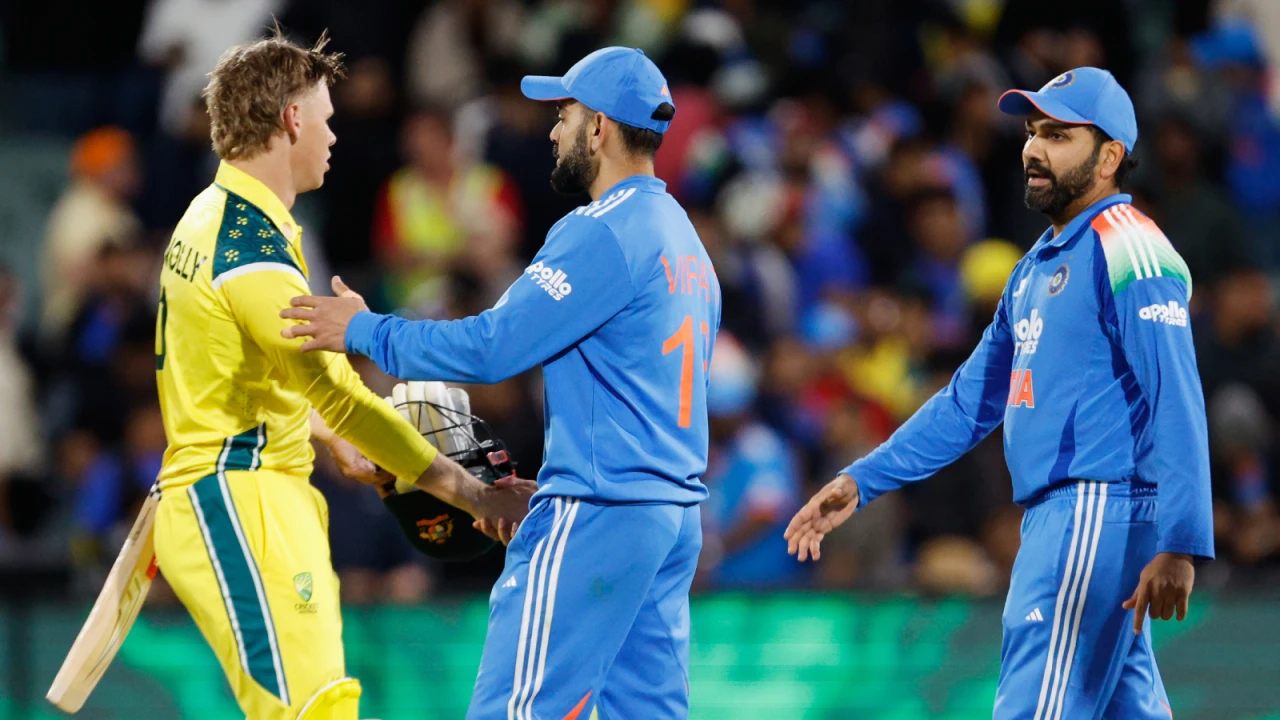
Cricket rivalries become special when two teams repeatedly meet in situations where every over feels important. The contest between India and Australia has developed exactly that character. Across Tests, ODIs and T20Is, both teams have produced matches filled with dramatic momentum shifts, outstanding individual performances and tactical battles. The rivalry is not simply about winning a bilateral series; it is often connected with major tournaments, championship races and high-pressure knockout games.
The modern ind vs aus contest also represents an interesting clash of cricketing philosophies. India traditionally brings a combination of technically strong batting, high-quality spin options and an increasingly aggressive fast-bowling attack. Australia, meanwhile, has long been associated with competitive intensity, attacking cricket, athletic fielding and the ability to perform under pressure. When these qualities meet, even a seemingly ordinary fixture can become a major cricketing event.
The rivalry has also continued to evolve as new generations of players have entered international cricket. Established stars remain influential, but younger batters, fast bowlers and all-rounders are increasingly capable of changing matches. With another major World Cup meeting scheduled for the opening stage of the 2027 ODI World Cup, the rivalry remains firmly at the center of international cricket.
Why IND vs AUS Has Become Such a Major Cricket Rivalry
The importance of ind vs aus comes from the quality and consistency of the two cricketing nations. India and Australia have both enjoyed long periods of dominance across different formats, and their encounters frequently carry significant consequences. A match between them can involve more than the result itself because players are often judged by how they perform against one of the strongest teams in world cricket.
Another reason is the difference in playing conditions. Matches in India can offer slower surfaces, spin assistance and challenging heat, while Australian grounds can provide pace, bounce and larger boundaries. Players therefore have to adjust their techniques and tactics depending on the location. A batter who dominates on Indian pitches may face an entirely different challenge on a lively Australian surface.
The rivalry has also benefited from memorable performances. Batters have produced match-winning hundreds, bowlers have delivered decisive spells and fielders have created spectacular moments. These performances remain part of cricket conversations long after the scoreboard has disappeared. That history gives every new encounter additional context.
The Changing Nature of India vs Australia Cricket
From Traditional Test Battles to Modern White-Ball Cricket
Historically, Test cricket provided much of the foundation for this rivalry. Long-format contests demanded patience, concentration and the ability to handle changing conditions across five days. The emergence of shorter formats has added another dimension. ODI and T20 matches require quicker decision-making, aggressive batting and specialized bowling plans.
Modern ind vs aus matches therefore demand flexibility from players. A batter might need to attack during the powerplay in a T20 match but show patience during the opening session of a Test. Similarly, bowlers must understand when to attack the stumps, when to use short-pitched deliveries and when defensive fields are necessary.
The 2025 white-ball tour in Australia demonstrated this variety. India and Australia played three ODIs followed by five T20Is. Australia won the ODI series 2–1, while India won two of the completed T20Is, Australia won one, and two T20Is produced no result.
Why Conditions Matter So Much
Pitch and weather conditions can dramatically influence the balance between the teams. Australian pitches traditionally offer bounce and carry, allowing fast bowlers to attack with pace. Indian conditions can provide more assistance to spin and make batting progressively more demanding in certain situations.
However, modern cricket has become less predictable. Improved preparation, international leagues and advanced analysis have helped players become more adaptable. Indian batters are increasingly comfortable facing high pace overseas, while Australian players have developed stronger methods for handling spin.
This adaptability is one reason recent contests have become difficult to predict. The team that understands the conditions faster often gains an advantage, particularly during the opening stages of a series.
Key Players Who Can Change the Contest
Every major India-Australia match contains individual battles that can influence the final result. Opening batters are particularly important because they determine the tone of an innings. A strong start can reduce pressure on the middle order, while early wickets can immediately expose the opposition’s less experienced batters.

Fast bowlers also have a major role. In Australian conditions, genuine pace combined with movement can create problems during the first 10 overs. In India, spinners can become central to controlling the middle overs. Successful teams usually identify the opposition’s weaknesses before the match and build their bowling plans around those observations.
The recent white-ball series highlighted several players capable of producing decisive performances. India had strong contributions from players such as Rohit Sharma in the ODI series and Abhishek Sharma in the T20Is, while Australia’s batting and bowling resources continued to provide significant challenges. The 2025 tour records list Rohit Sharma as India’s leading ODI run-scorer and Abhishek Sharma as the leading Indian T20I run-scorer across the tour.
IND vs AUS Tactical Battles to Watch
Opening Batters Against New-Ball Bowlers
One of the most important battles is between opening batters and the new-ball attack. The first few overs can establish the direction of an innings. Batters want to score quickly without taking unnecessary risks, while bowlers want to create uncertainty through movement, bounce and changes of length.
Against Australia, Indian openers often need to respect the bounce while identifying scoring opportunities square of the wicket. Against India, Australian openers may need to manage both seam movement and spin depending on the venue.
Middle Overs and Spin Control
The middle overs can become a strategic chess match. Captains must decide when to introduce spinners, which batters should be targeted and how aggressively the field should be positioned. A team that loses wickets during this period can struggle to accelerate later.
India has traditionally possessed considerable spin resources, while Australia has also developed strong methods for countering spin through footwork, sweeps and calculated attacking shots. The battle between spin bowlers and middle-order batters can therefore determine whether an innings reaches a competitive total.
Death Overs and Finishing Ability
The final overs are increasingly important in limited-overs cricket. Batters attempt to maximize every delivery while bowlers rely on yorkers, slower balls, wide lines and carefully protected boundaries.
A difference of 15 or 20 runs at the end of an innings can decide a close match. This makes finishing ability one of the most valuable qualities in modern cricket. Teams with several players capable of scoring rapidly in the final overs can transform an average position into a winning one.
Recent White-Ball Results at a Glance
The following table summarizes the completed men’s white-ball matches from India’s 2025 tour of Australia:
| Match | Venue | Result |
|---|---|---|
| 1st ODI | Perth | Australia won by 7 wickets |
| 2nd ODI | Adelaide | Australia won by 2 wickets |
| 3rd ODI | Sydney | India won by 9 wickets |
| 1st T20I | Canberra | No result |
| 2nd T20I | Melbourne | Australia won by 4 wickets |
| 3rd T20I | Hobart | India won by 5 wickets |
| 4th T20I | Carrara | India won by 48 runs |
| 5th T20I | Brisbane | No result |
The results show how competitive the teams were across different formats. Australia controlled the ODI series after winning the first two matches, but India responded strongly in Sydney with a nine-wicket victory. In the T20I series, India won the third and fourth matches, while the first and fifth fixtures ended without results.
What Makes the Rivalry Difficult to Predict
The biggest challenge in ind vs aus matches is that both teams possess multiple ways of winning. One match might be decided by a top-order batter, while another could depend on a fast bowler taking crucial wickets. This makes conventional predictions unreliable.
Team balance is another important factor. A side containing specialist batters may dominate on a flat pitch but struggle when conditions become difficult. A team with several all-rounders may have greater flexibility but potentially lack the specialist quality required in a crucial situation.
Small details can therefore become decisive. A dropped catch, an unsuccessful review, an over containing too many boundaries or a batting collapse can change the match within minutes. This unpredictability is one of the reasons supporters continue to follow the rivalry so closely.
The Importance of Young Players
The future of ind vs aus will depend heavily on emerging talent. International cricket is moving quickly, and established players cannot remain at the top forever. Both countries are therefore investing significant attention in developing players capable of handling international pressure.
Young batters need more than natural stroke-making ability. They must understand match situations, rotate the strike, build partnerships and adapt to different bowling plans. Young bowlers similarly need tactical awareness because international batters are increasingly capable of attacking predictable patterns.
India A’s recent contests against Australia A also illustrate the importance of developing talent through strong competitive environments. India A secured a series advantage in the unofficial Tests, while the teams also competed in unofficial ODIs.
What the 2027 World Cup Adds to the Rivalry
The next major chapter in ind vs aus is already attracting attention because India and Australia are scheduled to meet in the opening stage of the 2027 ODI World Cup. India is due to begin its campaign against Australia on October 7, making the fixture significant from the very beginning of the tournament.


Starting a World Cup against a major opponent creates a unique challenge. Neither side has much room for a slow beginning because the opening match can immediately affect momentum and confidence. Players will also enter the fixture with the pressure associated with a global tournament rather than a normal bilateral series.
The contest could become particularly important if both teams are competing for strong positions in the group. With tournament qualification structures and knockout progression at stake, every run and wicket can become valuable. The teams will therefore need to balance aggression with risk management.
Key Factors That Could Decide Future Matches
Several elements are likely to remain important whenever these teams meet:
- Quality of the opening partnership and powerplay bowling.
- Ability to handle pace, bounce and spin according to conditions.
- Fielding standards during pressure moments.
- Middle-order stability and death-over finishing.
These factors may appear straightforward, but executing them against a world-class opponent is difficult. A team can have excellent individual players and still lose because of poor decision-making at critical moments.
The Role of Leadership and Match Strategy
Captaincy is another major component of this rivalry. A captain must constantly make decisions about bowling changes, field placements, batting orders and reviews. Against a team as strong as India or Australia, defensive decisions can allow pressure to disappear, while overly aggressive decisions can create unnecessary risks.
Modern leadership is also increasingly supported by data analysis. Teams study individual matchups, scoring areas, bowling lengths and previous performances before developing game plans. However, statistics cannot completely predict what will happen during a live match. Captains still need to react to momentum and recognize when the original plan is no longer working.
This balance between preparation and instinct often separates successful teams from ordinary ones. In high-pressure contests, the ability to make the right decision at the right moment can matter more than having the theoretically stronger squad.
Why Fans Continue to Follow IND vs AUS
The appeal of ind vs aus goes beyond statistics. Supporters follow the rivalry because the matches often create memorable sporting stories. A player struggling for form can suddenly produce a match-winning performance, while a seemingly dominant team can collapse after one dramatic spell.
The emotional intensity also comes from the history between the sides. Victories are remembered for years, while defeats often motivate teams to return stronger. This creates a cycle in which every generation inherits stories from previous encounters and then adds new chapters of its own.
For younger fans, the rivalry is increasingly experienced through multiple formats. They can watch Test cricket for long tactical battles, ODIs for tournament importance and T20Is for fast-paced entertainment. That variety ensures that the contest remains relevant to different audiences.
Conclusion
The ind vs aus rivalry continues to represent one of the most compelling contests in international cricket. Its strength comes from a combination of history, elite players, contrasting conditions, tactical complexity and the pressure attached to major tournaments. Neither side can depend solely on reputation because the margin between victory and defeat is often extremely small. Recent white-ball results have shown that momentum can move rapidly between the teams. Australia demonstrated its strength by taking the 2025 ODI series, while India responded with strong performances in the T20I portion of the tour.